
Updated on 03/22/2024
Dear readers
My name is Frank and I run a tour operator in Bogota, specializing in custom-made and Colombia luxury travel.
At the end of this guide you will find a list of many other helpful travel guides for Colombia.
Content
Introduction to Pasto
Pasto is the capital of the department of Nariño with around 460,000 inhabitants who are called Pastuso. The municipality is at an average elevation of 2,527 meters above sea level.
Due to its geographical location, Pasto has a fairly cool climate, with average temperatures between 7°C and 17°C, although temperatures rarely drop below 6°C or rise above 19°C.
Pasto is one of the oldest cities in Latin America and has one of Colombia’s richest histories, but it is not known exactly when and by whom the city was founded between 1535 and 1540.
During the liberation of the Latin American peoples, the pastusos remained loyal to the Crown and refused to be liberated for many years. Pasto was believed to be the stronghold of royalty in America.
During the Spanish colonization, the town was known as Villaviciosa de la Concepción in the province of Hatunllacta.
The city’s name changed after the slavers were driven out, adopting a word (pasto) from the Quechua language meaning “blue river”.
Over the years, the department of Nariño was created and Pasto was given the status of departmental capital.
Top attractions and things to do in Pasto
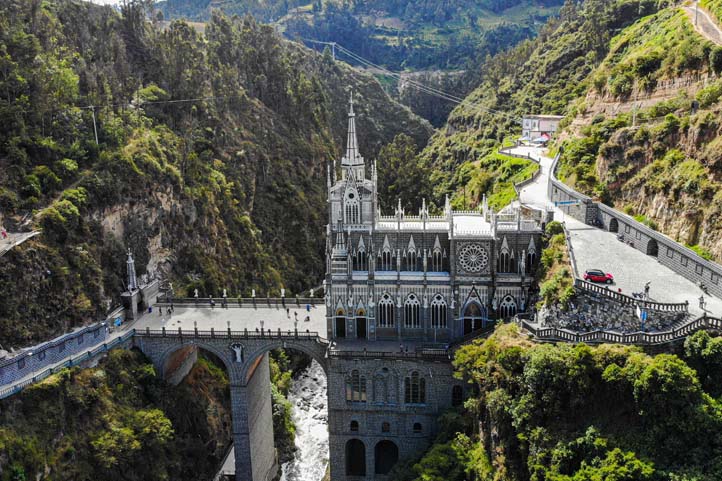
Colombia has many beautiful landscapes and Pasto reflects that.
Churches in Pasto
Due to its history with the Spanish Crown, Pasto is home to many colonial churches:
- San Juan Bautista
- La Catedral
- La Merced
- Christo Rey
- San Agustin
- San Andres
- San Felipe
Even if you are not a believer, you can enjoy the beautiful architecture of these buildings.
Nariño Gold Museum
The Gold Museum in Nariño houses a large collection of pre-Columbian relics found in the region. Each exhibition tells about the life of the people in pre-Hispanic times.
The best part is that entry is free.
Taminango Museum
The Taminango Museum, located downtown, has exhibits that explain the processes used by the ancient pastusos to make their handicrafts. The architecture of the museum is also admirable as it is a 17th century building.
Lagoon La Cocha
Cocha Lagoon is 40 minutes from Pasto. In the surroundings of the lagoon you can admire the beautiful landscape of the moors and in the port, you can enjoy traditional dishes.
Colombia’s best specialty coffees in Pasto
Narino department have the ideal climate for growing coffee, but the volcanic soil also produces one of the best coffees in the world. So, if you are visiting the capital of Nariño, we recommend a tour with tasting of the best coffee beans in Nariño.
Best time to visit Pasto
Pasto is a cool town.
- From January to June, the probability of precipitation is high and the average temperature is 16°C.
- From June to September there is little chance of precipitation and the average temperature is 18°C.
- From November to December, the chance of precipitation is in the medium range and the average temperature is 16°C.
Cultural program in Pasto
Some of Colombia’s most important festivals take place in Pasto.
Black and white carnival
This festival is so steeped in history that it has been declared an Intangible Cultural Heritage of Humanity by UNESCO.
The Black and White Carnival was created to commemorate a minor slave victory. It was created on January 5, 1807, when a letter arrived from Spain granting the slaves a day of freedom.
On the appointed day, the slaves had the opportunity to relive their past. They put on folklore performances, danced in the streets, accompanied by music. From the beginning of the festival and in search of equality, they painted the white fellow citizens with charcoal.
Nowadays, the festival consists of five main stages, with a day dedicated to each stage. Usually the carnival starts on January 2nd, but the beginning can be postponed by a few days.
- Carnavalito is the opening of the Carnival, where the children mimic the adults’ activities by performing a parade of small floats.
- Canto a la tierra is a preliminary stage in which the choreographic collectives compete to take part in the final parade.
- The Castañeda family: parades are held in which this important family is impersonated with the most cartoonish costumes.
- Day of the Blacks, a day to commemorate the slaves, when the Carnival Queen rides around on her chariot handing out makeup.
- Day of the Whites or Day of the Great Parade, as a contrast to the day before, people paint themselves white to take to the streets and see the nearly 7-kilometer parade. In this parade one can see individual costumes, comparsas, murgas, mini floats and floats. Each of the above contains allegorical messages on this important date.
Pasto International Film Festival
The international film festival was founded with the aim of promoting audiovisual culture in Southwest Colombia. Feature films as well as regional, national and international short films are shown at this festival, which are awarded in various categories.
The festival has already seen 18 editions and usually takes place in October.
International Theater Festival of Pasto
The Pasto International Theater Festival takes place in the city for ten days, hosting various theater groups. In recent years there have been guests from Argentina, Brazil and Chile.
During these ten days you can experience plays, debates, drama workshops and conservatories. The best part is that it brings theater to the streets, as plays are performed not only in theaters but also in public squares.
Where to eat in Pasto?
In Pasto you will find a very innovative gastronomy. We introduce you to some of the best restaurants.
La Merced
Carrera 36 #12-14 Aurora Panamericana, Pasto Colombia
In this restaurant you will find excellent cuts of meat and the best of Colombian cuisine.
La Vereda Cocina de Origen
Carrera 36 # 19-110, Pasto Colombia
Colombian recipes are prepared here at the highest quality level. There are also vegetarian options.
Cafe La Catedral
Carrera 26 # 16-37
Calle 20 #34 -34, Pasto Colombia
A perfect place for a delicious coffee.
Where to stay in Pasto?
Conclude your adventure in Pasto with a stay in a hotel that combines comfort and ideal location near the Historic Center of Pasto or the Carnival Museum.
Don’t miss our lodging recommendations in The Best Hotels in Pasto.
How to get to Pasto
By plane
From Bogota you can reach Antonio Nariño Airport in the municipality of Chachagüí, which is about 40 minutes from Pasto. The flight from Bogota takes 1 hour and 30 minutes. The journey from the airport to Pasto takes around 40 minutes.
The airlines that offer connections are as follows:
By bus
You can also travel by land, which is cheaper than flying. But you should keep in mind that these are very long journeys as it takes up to 18 hours from Bogotá to Pasto by bus.
The easiest way to buy tickets is through Pinbus.
How to get around in Pasto?
To get around Pasto you can use public buses. There are about 20 different routes that allow you to visit every corner of the city.
Besides buses and taxis, you can also use platforms like Uber and Cabify to get around, although the latter are more expensive in comparison.
Colombia Travel Guides
Here you will find travel guides for the most popular regions in Colombia, which we have put together during our extensive travels around the country.
- Colombia Travel Guide
- Bogota Colombia Travel Guide
- Medellin Colombia Travel Guide
- Cartagena Colombia Travel Guide
- Santa Marta Colombia Travel Guide
- Cali Colombia Travel Guide
- Coffee Triangle Colombia Travel Guide
- Barranquilla Colombia Travel Guide
- La Guajira Colombia Travel Guide
- Tayrona Park Colombia Travel Guide
- Palomino Colombia Travel Guide
- San Andres Island Colombia Travel Guide
- Providencia Island Colombia Travel Guide
- Casanare Llanos Colombia Travel Guide
- Amazonas Colombia Travel Guide
- Chocó Colombia Travel Guide
- Santander Colombia Travel Guide
- Boyaca Colombia Travel Guide
Travel Guides to Colombia’s Small Towns
Here you will find travel guides for less popular destinations in Colombia. Some of these destinations are even real insider tips and not even known to the Colombians as travel destinations.
- Aguachica Colombia Travel Guide
- Arauca Colombia Travel Guide
- Armenia Colombia Travel Guide
- Barrancabermeja Colombia Travel Guide
- Bucaramanga Colombia Travel Guide
- Buenaventura Colombia Travel Guide
- Canyon Chicamocha Colombia Travel Guide
- El Carmen de Bolivar Colombia Travel Guide
- Caucasia Colombia Travel Guide
- Cucuta Colombia Travel Guide
- Florencia Colombia Travel Guide
- Ibagué Colombia Travel Guide
- Inirida Colombia Travel Guide
- Ipiales Colombia Travel Guide
- Magangue Colombia Travel Guide
- Manizales Colombia Travel Guide
- Mitu Colombia Travel Guide
- Mocoa Colombia Travel Guide
- Monteria Colombia Travel Guide
- Neiva Colombia Travel Guide
- Palmira Colombia Travel Guide
- Pasto Colombia Travel Guide
- Pereira Colombia Travel Guide
- Popayan Colombia Travel Guide
- Puerto Asis Colombia Travel Guide
- Puerto Carreno Colombia Travel Guide
- Quibdo Colombia Travel Guide
- Riohacha Colombia Travel Guide
- San José del Guaviare Colombia Travel Guide
- Sincelejo Colombia Travel Guide
- Sogamoso Colombia Travel Guide
- Tulua Colombia Travel Guide
- Tumaco Colombia Travel Guide
- Tunja Colombia Travel Guide
- Turbo Colombia Travel Guide
- Valledupar Colombia Travel Guide
- Villa de Leyva Colombia Travel Guide
- Villavicencio Colombia Travel Guide
- Yopal Colombia Travel Guide
