
Updated on 03/15/2024
Dear readers
My name is Frank and I run a tour operator in Bogota, specializing in custom-made and Colombia luxury travel.
At the end of this guide you will find a list of many other helpful travel guides for Colombia.
Content
Why Visit Barranquilla?
The city of Barranquilla, popularly known as “la arenosa”, is the capital of the department of Atlántico and is located on the Caribbean coast of Colombia.
The city borders to the east with the department of Magdalena, to the south with the municipality of Soledad, to the north with the Caribbean Sea and to the west with the municipalities of Tubará, Puerto Colombia and Galapa.
Barranquilla is not one of the classic destinations for foreign tourists (outside of the carnival), but it does have some attractions.
Facts about Barranquilla
- The city of Barranquilla is the fourth largest city in the country after Bogotá, Medellín and Cali.
- Barranquilla is known as the “Golden Gate of Colombia” because it was here that the country’s first river and sea port was built in the mid-19th century. The city is also known as “Curramba La Bella”, a nod to the festive atmosphere that can be felt in every corner of the city.
- The main shopping centers in Barranquilla are the Buenavista Shopping Center and the Villa Country Shopping Centre, both located to the north of the city.
- Barranquilla is at an altitude of 18 meters above sea level.
- In 1925, the country’s first public corporations were established in Barranquilla.
- Barranquilla is a cosmopolitan city as it was formed by the arrival of immigrants from different parts of the world engaged in economic, commercial, cultural and educational fields.
- Barranquilla is on the west bank of the Magdalena River.
- Barranquilla has a warm climate with temperatures between 24°C and 32°C.
- Barranquilla’s main industries are trade, services, finance and fishing.
- Barranquilla was the birthplace of great musicians, athletes, journalists, painters and writers.
- Barranquilla has a population of approximately 1,300,000 people.
- Barranquilla was founded on April 7th by Manuel Rodríguez Torices.
- Barranquilla has an area of 154 square kilometers.
Tourist attractions in Barranquilla
Here are some of the city’s top attractions:
Paseo de Bolivar
If you’re interested in history, don’t miss Paseo de Bolivar, Barranquilla’s main avenue. Here you will find the Church of San Nicolas, the Mayor’s Office, the Plaza de Bolivar and various shops.
There you can also enjoy the delicious foods offered by the local vendors, such as B. the traditional arepas and coconut water.
La Paz Square
This square is a meeting point where locals and tourists come together and enjoy cultural events.
Plaza de La Paz is also known as Plaza Juan Pablo II, in honor of the Pope’s visit, and is located between Avenida Olaya Herrera and streets 47 and 53.
If you visit this square you will also be able to see the statue of the friendly policeman.
San Nicolás Tolentino Temple
This temple pays homage to San Nicolás de Tolentino, the patron saint of Barranquilla.
It is located in the historic center of Barranquilla, more precisely on the east side of Paseo Bolivar.
The Window to the World Monument
The Window to the World monument is located between Via 40 and Avenida Circumvalar, the two main streets of Barranquilla.
This monument, designed by architect Diana Escobar Boelly for the celebrations of the 2018 Central American and Caribbean Games, features two 45-meter-tall columns representing industry and culture.
In the lower part of the steel, aluminum and glass monument, there is also a gallery displaying the history of the city.
Metropolitan Cathedral Maria Reina
In the center of the city, more precisely at Carrera 45 # 53 – 140, is the Catedral Metropolitana María Reina, a Catholic cathedral dedicated to the Virgin Mary.
There are mosaics, stained glass windows and a beautiful sculpture of the Latin American liberator Christ.
Barranquilla Zoo
If you like animals, the Barranquilla Zoo will surely fascinate you.
This is located at Calle 77 N # 68 – 40. In the zoo’s 2-hectare site, you will find more than 500 animals from 140 species, with which in some cases you can even interact.
Zebras, vipers, monkeys, elephants, manatees and tigers are just a few of the animals that live at Barranquilla Zoo.
Metropolitan Stadium Roberto Meléndez
The Metropolitan Stadium Roberto Meléndez is the ideal place to enjoy the passion of football, as it has an incredible atmosphere when the Colombian national team and the city’s team, Junior de Barranquilla, play.
The stadium is located at Calle 34 # 43-31 surrounded by several bars and restaurants where you can enjoy local dishes from the region.
Museum of the Caribbean
The Museo del Caribe is an ideal place to learn about the culture, music, gastronomy, traditions and history of Barranquilla.
At Calle 36 # 46-66 is a bronze statue of the writer, journalist and Nobel Prize winner in literature Gabriel García Márquez, as well as a media room that pays tribute to him.
La Cueva
This restaurant is known for being one of the places where Gabriel García Márquez frequented and where he exchanged ideas with other writers.
If you decide to visit, you can enjoy jazz concerts, book launches and, of course, local dishes from the region.
House of the poet Julio Flores
The house of the famous poet Julio Flores is just 40 kilometers from Barranquilla, more precisely in the town of Usiacurí.
There you can visit a small museum with various furniture, photos, objects and literary works of the poet.
You can also take part in various literary events that take place there.
Puerta de Oro Malecón
The Malecón Puerta de Oro is located near the Centro de Eventos Puerta de Oro on the corner of Calle 40 and Calle 79.
If you visit the promenade, you can admire the Magdalena River while walking.
Salgar Castle
20 minutes from Barranquilla, in the city of Puerto Colombia, is Salgar Castle, a fortress built in 1928 that offers incredible views of the sea, as well as a restaurant and rooms for private events.
Theater Amira de La Rosa
Located at Carrera 54 and Calle 52, the Amira de La Rosa Theater is an ideal place to enjoy painting exhibitions, plays and musical performances.
Combarranquilla
If you want to relax, you should visit the Combarranquilla Leisure Center which is only 15 minutes from Barranquilla.
There are table tennis tables, soccer fields, a gym, a spa, cinema halls, swimming pools with slides, restaurants and even a planetarium.
Puerto Colombia beach
Puerto Colombia beach is a great place to relax and visit different restaurants where you can enjoy the local dishes of the region.
Anthropological and Ethnological Museum
The Anthropological and Ethnological Museum is located at Calle 68 # 53-45 and houses various archaeological finds, including from the Tayrona, Calima, Guane, Quimbaya, Tumaco, Momil and Tubará cultures.
House of Carnival
The Casa del Carnaval is the ideal place to learn more about Barranquilla’s emblematic Carnival.
Various documents, pictures, masks, costumes, videos and other objects that are part of the history of the carnival are exhibited here.
The Casa del Carnaval is located at Carrera 54 # 49B – 39, very close to the Parque Cultural del Caribe.
Bocas de Ceniza
If you visit Barranquilla, you cannot miss Bocas de Ceniza, a beautiful place where the waters of the Caribbean Sea and the Magdalena River mingle.
This location is off Route 40 just 15 minutes from Barranquilla.
Romantic Museum
The Romantic Museum was inaugurated in 1986 and is located at Carrera 54 # 59 – 199.
It houses more than 12,000 pieces from Barranquilla’s history.
Here you will find various documents, records, photos, newspapers, typewriters, carnival costumes and other historical items.
Pumarejo Bridge
The Pumarejo Bridge crosses the Magdalena River and connects the departments of Atlántico and Magdalena.
This impressive infrastructure has a total length of 3.2 kilometers, making it the longest suspension bridge in Colombia.
Monument Ventana de Campeones
Also known as the Shark Fin, this monument is located in the roundabout of the extension of the Great Malecon of the Magdalena River.
The memorial is 30 meters high and honors the city’s football team, Junior de Barranquilla.
Totumo Volcano
An hour from Barranquilla, more precisely in the town of Galerazamba, there is the Totumo Volcano, a 15-meter-high rock formation with a 3-meter crater where you can take a mud bath.
Remember that you shouldn’t stay in the mud bath for more than 10 minutes, so set your stopwatch carefully.
After the mud bath, you can rinse off in the freshwater swamp in front of the volcano and then enjoy typical local food offered by local vendors.
Puerto Velero Beach
Puerto Velero beach is an ideal place to practice various water sports such as windsurfing and to watch beautiful and evocative sunsets.
Immaculate Church
The Inmaculada Church is undoubtedly one of the oldest churches in Barranquilla. Various religious celebrations are held in it as people choose it for its architectural design and history.
This iconic Barranquilla church is located in the El Prado neighborhood.
Swan Lake
Swan Lake is just 3 kilometers from Barranquilla.
Here you can enjoy the beautiful scenery while boating and fishing.
Musician Park
If you are a music lover, you must visit the Parque de los Músicos. Located on 72nd and 46th Streets, it houses a 16-foot statue of famed singer Joe Arroyo, created by Yino Márquez.
Craft markets and concerts by various groups of Vallenato musicians are also held here.
Old customs building
At Via 40 # 36-105 is the Antigua Aduana building which is more than 150 years old.
Today it is the seat of the Pilot Library of the Caribbean and the Chamber of Commerce.
Edgar Rentería Stadium
Édgar Rentería Stadium is the premier baseball practice venue in the city. It was inaugurated in 2017 for the Central American and Caribbean Games held in the city the following year.
The stadium has a capacity of 12,000 people and is located at Calle 47 # 56-12.
Pradomar
Just 11 miles from Barranquilla is Pradomar Beach, where you can practice water sports and find a wide variety of restaurants.
Puerto Salgar Beach
At Puerto Salgar beach, 15 km (9 miles) from Barranquilla, you can learn to fish and visit various restaurants.
Best time to visit Barranquilla
The best time to visit Barranquilla is between December and March as during this period the weather conditions are more favorable to visit and enjoy the different tourist spots of the city.
Also, in February you can experience the city’s most important event, the Barranquilla Carnival.
Events in Barranquilla
Here are the main events taking place in Barranquilla throughout the year that you shouldn’t miss.
Barranquilla Carnival
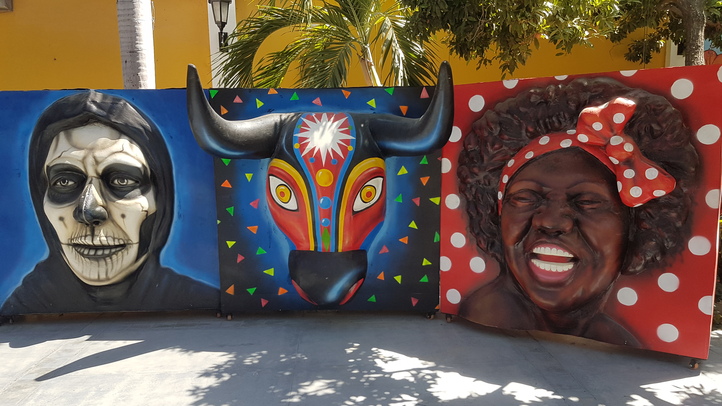
The Barranquilla Carnival is undoubtedly the most important event of the year in the city, expressing the folklore of Colombia’s Caribbean coast and the diverse cultural expressions of the city’s inhabitants.
People dress up as characters representative of Barranquilla culture, such as the Congo, the Monocuco and the Marimonda.
In addition, dances such as the cumbia, the garabato and the mapalé are performed.
This festival, which has more than a hundred years of history, lasts about 6 days and generally begins in February, in the days leading up to Ash Wednesday.
The Barranquilla Carnival is a cultural treasure of the city, attracting thousands of people from around the world every year.
Its importance is such that in 2003 it was declared Oral and Intangible Cultural Heritage of Humanity by UNESCO.
Barranquijazz
This festival, which has been taking place since 1997, is one of the most important on the Caribbean coast as it brings together the best exponents of the jazz genre at national and international level.
The event is organized by the Fundación Cultural Nueva Música and usually takes place at the Teatro Amira de la Rosa, but there are also performances in other parts of the city, as well as courses, workshops and conferences on jazz.
Barranquijazz takes place in September every year.
Festival of sweets
This event pays homage to Afro-Colombians and their culinary traditions related to sweets.
The Festival del Dulce takes place in the last two weeks of March.
National and International Theater Meeting of Barranquilla
This event brings together the best representatives of national and international theater with the aim of strengthening the artistic manifestations and expressions of the Colombian Caribbean region.
Various meetings, plays, courses and seminars are organized for this purpose.
Carnival of the Arts
This cultural event showcases all the artworks to be displayed during the Barranquilla Carnival.
It usually takes place in the first days of February.
The Carnival of the Arts has been held since 2007 and includes the participation of artists, musicians, writers, intellectuals and filmmakers.
International Festival of Storytellers El Caribe Cuenta
It is an event organized by the Luneta 50 Foundation that brings together different comedians and storytellers.
The festival takes place in August.
Platform K
Plataforma K is a fashion fair where national and international designers meet to present the latest fashion trends.
You can find here new collections of clothing, accessories and of course jewelry. You can also learn from the different designers as they share their knowledge in different forums and conferences.
This fair is considered one of the most important in the Colombian Caribbean.
Barranquilla Day
The founding of the city is celebrated on April 7th every year. Various concerts, as well as military and folklore parades are held on this day.
International festival of short films in the streets
Annual event organized by the Fundación Cine a la Calle that screens the best national and international short films.
Nightlife in Barranquilla
Barranquilla has incredible places to enjoy music and dancing, here are some of them.
La Troy
Carrera 44 # 72 – 263
La Troja is one of the best bars in Barranquilla. If you like salsa, you can’t miss this place because since its creation in 1966 it has been the meeting place for all lovers of this genre of music.
On the other hand, La Troja offers a wide variety of cocktails and alcoholic beverages.
La Verbena
Carrera 21 #45
https://www.facebook.com/laverbeneravacilepalmundo/
Near the Church of Nuestra Señora de Chiquinquirá is La Verbenera, a place with excellent food and a great atmosphere to share with friends.
911 Club
Miramar Shopping Center, Carrera 43 # 99 – 50
If you like reggaeton, you must visit the 911 Club.
Rondalla Estadio Bar
Carrera 44 # 41
https://www.facebook.com/profile.php?id=100063539472067
There is a wide range of food and alcoholic beverages here.
Canteen La Maria
Calle 99 # 53 – 40
https://www.facebook.com/cantinalamaria/
The best place in Barranquilla to enjoy ranchera music.
Trucupey Bar
Calle 53 # 46 – 192
https://www.facebook.com/trucupeybaq/?locale=es_LA
The Trucupey Bar hosts various events and shows where you can sing, drink and dance.
Bourbon street
https://www.facebook.com/Bourbonstbaq/
Carrera 52 # 74 – 73
This bar is modeled after the famous French Quarter street in New Orleans.
There are live bands and more than 40 types of beer.
The Embassy Pub
Calle 84 # 44 – 49
https://www.facebook.com/laembajadapub/?rf=1150901461652411
This bar is known for its warm atmosphere and attentive staff.
Here you will find alcoholic and non-alcoholic beverages to accompany your meetings with friends and family.
La Matriarca
Carrera 52 # 80, Local 2
https://www.facebook.com/lamatriarcabarranquilla/
La Matriarca offers good food and live music.
Patio Barranquilla
Carrera 49 # 72 – 155
https://www.facebook.com/Patiobaq/?locale=es_LA
This LGTBI bar offers outdoor crossover music.
Manhattan Barranquilla
Carrera 43 # 80 – 194
https://www.facebook.com/manhattanpub1/
Manhattan Barranquilla has good music, alcoholic drinks and the best American hamburgers in town.
Frog Club
Calle 93 No. 43 – 43
https://www.facebook.com/FROGBaq/?locale=es_LA
The Frog Club has a wide range of music, cocktails and snacks.
Typical food in Barranquilla
These are some of the typical dishes that you can find in the city of Barranquilla.
Lisa rice
Arroz de lisa, also known as arroz de payaso, is a dish made with rice, lisa (saltwater fish), yucca, whey, boiled egg, and cornbread.
It is usually sold at street stalls and also in restaurants.
Butifarra
Butifarra is a beef sausage seasoned with pepper.
It is usually sold on the street or in supermarkets.
Shelled corn on the cob
This dish consists of corn on the cob, coastal cheese, lettuce, skinny potatoes and pineapple sauce.
Bocachico in sheep’s clothing
It is a river fish stuffed with fried vegetables and then wrapped in bijao leaves, tied with a flatbread and finally roasted over charcoal.
Sancocho
This dish is basically a soup with tubers, meat, spices and vegetables.
It is usually served with avocado and white rice.
Arepa de huevo (egg arepa)
An arepa made from corn with an egg inside.
Cocadas
These are small sweet portions that are prepared with coconut and various fruits such as pineapple or papaya.
Enyucado
It is a dessert made with panela and yucca.
Corozo Juice
It is a juice made from corozo, a fruit similar to blackberry, also used to prepare cocktails.
Mote de queso
Mote de queso is a typical coastal soup that includes cheese, onions, and sweet potatoes.
Chicharron
Chicharrón is basically fried pork bacon with skin.
In Barranquilla, it is usually eaten after the party is over.
Patillazo
This is a drink made from watermelon or patilla.
Mojarra frita
A dish consisting of mojarra (saltwater fish), patacon, coconut rice and salad.
This is usually accompanied by panela water with lemon.
Arepa dulce de anis
This sweet arepa is made with cheese, white corn, anise and sugar.
Arepa dulce de anís is usually eaten with fruit.
Carimañola
Carimañola is a cooked yucca dough filled with shredded and fried meat or cheese.
Raspao
Raspao is basically ice cream served in a disposable cone and sweetened with lemon, cola, tamarind, or condensed milk.
Bean donut
A bean-filled donut served with whey (salted cream) or chimichurri.
Chicha de piña con arroz (pineapple chicha with rice)
A drink that contains pineapple peel, cooked rice, and sugar.
Accommodation in Barranquilla
End your day in Barranquilla in style! In some of the more popular neighborhoods like El Prado or Riomar you can keep the party going or end the day with a nice siesta.
Check out our section of the most recommended accommodations in Barranquilla.
- The Best Hotels in Barranquilla.
- The Cheapest Hotels in Barranquilla.
- The Most Luxurious Hotels in Barranquilla.
How to get to Barranquilla
The city of Barranquilla is located 712 kilometers from Bogotá, the capital of Colombia. There are several ways to get from Bogotá to Barranquilla.
Airplane
The quickest way to reach Barranquilla is by plane. Ernesto Cortissoz International Airport is connected to Bogotá and the main cities of the country. This airport is located 7km (4.3 miles) south of Barranquilla in the neighboring municipality of Soledad.
You can fly with different airlines like Avianca or Satena.
The airlines that offer connections are as follows:
Bus
Barranquilla has a bus station in the municipality of Soledad, more precisely at Carrera 14 No. 54 – 186, from where you can travel by bus with companies such as Expreso Brasilia, Copetran and Berlinas del Fonce.
The journey takes about 16 hours.
The easiest way to buy tickets is via Pinbus.
By car
Another option is to travel by car, although it can be quite long, taking between 17 and 18 hours depending on traffic jams and travel speed.
Please note that you have to pay about 13 tolls on the route.
The following companies rent cars in Colombia:
- hertz
- advice
- ABC
Colombia Travel Guides
Here you will find travel guides for the most popular regions in Colombia, which we have put together during our extensive travels around the country.
- Colombia Travel Guide
- Bogota Colombia Travel Guide
- Medellin Colombia Travel Guide
- Cartagena Colombia Travel Guide
- Santa Marta Colombia Travel Guide
- Cali Colombia Travel Guide
- Coffee Triangle Colombia Travel Guide
- Barranquilla Colombia Travel Guide
- La Guajira Colombia Travel Guide
- Tayrona Park Colombia Travel Guide
- Palomino Colombia Travel Guide
- San Andres Island Colombia Travel Guide
- Providencia Island Colombia Travel Guide
- Casanare Llanos Colombia Travel Guide
- Amazonas Colombia Travel Guide
- Chocó Colombia Travel Guide
- Santander Colombia Travel Guide
- Boyaca Colombia Travel Guide
Travel Guides to Colombia’s Small Towns
Here you will find travel guides for less popular destinations in Colombia. Some of these destinations are even real insider tips and not even known to the Colombians as travel destinations.
- Aguachica Colombia Travel Guide
- Arauca Colombia Travel Guide
- Armenia Colombia Travel Guide
- Barrancabermeja Colombia Travel Guide
- Bucaramanga Colombia Travel Guide
- Buenaventura Colombia Travel Guide
- Canyon Chicamocha Colombia Travel Guide
- El Carmen de Bolivar Colombia Travel Guide
- Caucasia Colombia Travel Guide
- Cucuta Colombia Travel Guide
- Florencia Colombia Travel Guide
- Ibagué Colombia Travel Guide
- Inirida Colombia Travel Guide
- Ipiales Colombia Travel Guide
- Magangue Colombia Travel Guide
- Manizales Colombia Travel Guide
- Mitu Colombia Travel Guide
- Mocoa Colombia Travel Guide
- Monteria Colombia Travel Guide
- Neiva Colombia Travel Guide
- Palmira Colombia Travel Guide
- Pasto Colombia Travel Guide
- Pereira Colombia Travel Guide
- Popayan Colombia Travel Guide
- Puerto Asis Colombia Travel Guide
- Puerto Carreno Colombia Travel Guide
- Quibdo Colombia Travel Guide
- Riohacha Colombia Travel Guide
- San José del Guaviare Colombia Travel Guide
- Sincelejo Colombia Travel Guide
- Sogamoso Colombia Travel Guide
- Tulua Colombia Travel Guide
- Tumaco Colombia Travel Guide
- Tunja Colombia Travel Guide
- Turbo Colombia Travel Guide
- Valledupar Colombia Travel Guide
- Villa de Leyva Colombia Travel Guide
- Villavicencio Colombia Travel Guide
- Yopal Colombia Travel Guide
