
Updated on 03/14/2024
Dear readers
My name is Frank and I run a tour operator in Bogota, specializing in custom-made and Colombia luxury travel.
At the end of this guide you will find a list of many other helpful travel guides for Colombia.
Content
Why visit Armenia?
Armenia is a destination that combines history, natural beauty and a rich cultural heritage. Located in the heart of Colombia’s coffee-growing region, Armenia is a city with a fascinating history and unique charm.
Armenia has preserved its colonial architecture and historical monuments. In addition, Armenia is surrounded by the imposing Andes, lush coffee plantations and nature reserves such as the Cocora Valley, which has the tallest palm trees in the world, the wax palms.
What makes Armenia an ideal destination for visitors is the variety of activities and experiences on offer. Nature lovers can explore the region’s coffee plantations, hike in the Andes or discover the Cocora Valley. Culture lovers can visit the city’s museums, galleries and historical monuments. Foodies will be delighted by the variety of traditional dishes, including the famous “bandeja paisa”, a hearty and delicious dish that represents the gastronomy of the region.
In my opinion, Armenia is a hidden gem of Colombia that is often overlooked by tourists. However, it offers a unique and authentic experience that is hard to find in other destinations.
About Armenia
Armenia is the capital of the department of Quindío, which is located in the west-central region of Colombia. Armenia has around 320,000 inhabitants. The city was founded on October 14, 1889 and is located at an altitude of 1,551 meters above sea level.
In Armenia there is a tropical savannah climate with average temperatures between 17°C and 27°C. The most important economic sectors in Armenia are agriculture, especially coffee production, and tourism. In addition, the city has significant textile, construction and trading industries.
Tourist attractions and activities
Plaza de Bolivar
Located in the heart of the city, Plaza de Bolivar is surrounded by important buildings such as the Governorate of Quindio, the Cathedral of the Immaculate Conception and the Monument to the Effort.
Visitors can start their visit to Armenia with a walking tour of Plaza de Bolivar, where they can enjoy the sights and sounds of the city and follow the daily lives of the residents. The square is an ideal spot for people-watching and soaking up the local culture.
Besides the buildings and the statue of Simon Bolivar, Plaza de Bolivar also has beautiful gardens and green spaces where visitors can relax and enjoy the sun. The square is a popular meeting place for locals and tourists alike and is frequently used for cultural events and festivals throughout the year.
Quimbaya Gold Museum
If you want to learn more about the history and culture of this region, a visit to the Quimbaya Gold Museum is a must. Here you will find an impressive collection of gold pieces that belonged to the ancient indigenous people of Quindío. The museum also offers temporary exhibitions and educational workshops.
Park of Life
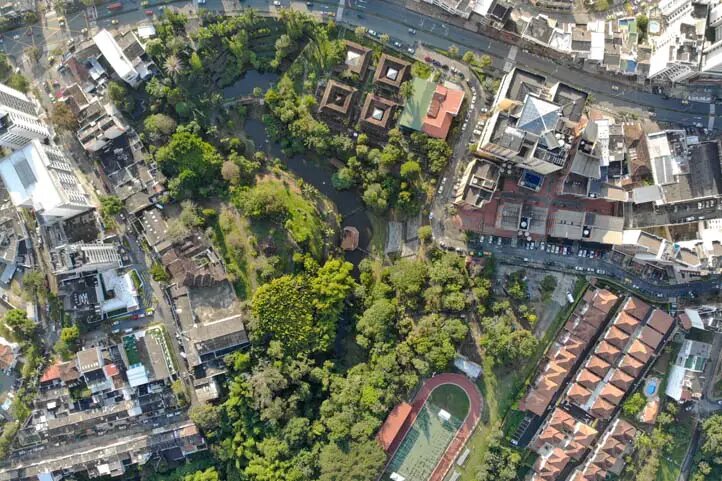
To enjoy direct contact with nature, we recommend the Parque de la Vida. Located in the center of Armenia, this green space features ecological hiking trails, artificial lakes, botanical gardens, and a wide variety of flora and fauna. The park also features picnic areas, children’s playgrounds, and an outdoor auditorium.
Cafe La Morelia
If you are a coffee lover or just want to try some of the best coffee in the world, you should definitely visit La Morelia cafe. Located about 20 minutes’ drive from Armenia, this coffee farm offers tours of its plantations and facilities. You can also taste different types of coffee prepared by expert baristas.
Cocora Valley
One of the most emblematic and impressive places near Armenia is the Cocora Valley. This is located in the municipality of Salento, about 40 minutes by car from Armenia. Here you can admire the unique landscape characterized by the wax palms, the national tree of Colombia. You can also hike the ecological trails, horseback ride to viewpoints or visit the Santa Rita waterfall.
Best time to visit Armenia
The best time to go to Armenia can vary based on the preferences of the traveler. In general, however, December to March and June to August are the driest and sunniest months, while April, May, September and October are the rainiest and cloudiest.
However, the weather in Armenia can be very unpredictable and can change quickly, so it’s always a good idea to bring warm, comfortable clothing, especially during the rainy season.
Events in Armenia
Armenia offers various festivals and events. Here are some of the most important and representative of the city:
Festivals in Armenia
These are the celebrations of the anniversary of the founding of the city, which take place in October with a varied program of culture, art and leisure. Outstanding events include the traditional Yipao Parade and the Cuyabro Parade, as well as the Hermanos Moncada National Duet Competition and the Cuyabro Folk Competition. These festivals are an opportunity to promote the identity of the residents of El To proudly display Quindio and the joy inherited from the founders.
National Coffee Festival
This is one of the most important festivals in the department of Quindío, taking place in the municipality of Calarcá in the last week of June. This festival honors the most important product in the region and the work of the coffee farmers. Events include the National Coffee Government, the National Coffee Folk Festival, the National and International Meeting of Folk Dances, and the National and International Bolero Festival.
Expoartesanías handicraft fair Quindio
This event brings together more than 200 local, national and international artisans at the Municipal Cultural Center for Congress in December. It offers the opportunity to admire and buy products made from different techniques and materials such as wood, leather, ceramics, natural fibres, metals and textiles. In addition, workshops, conferences, gastronomic and cultural exhibitions are offered.
Nightlife in Armenia
Armenia has a wide range of bars, nightclubs and cafes for every taste and every occasion. Whether you are looking for a quiet and cozy atmosphere or a lively and fun atmosphere, here you will find ways to have a good time listening to music and sampling the delicious cocktails, liqueurs and drinks on offer. These places are:
Mariajuana Bar
Carrera 14 # 13N-07
This is one of the most popular and busiest bars in the city. It stands out for its cannabis-style decoration and its varied music, ranging from rock to reggaeton. Here you can enjoy an excellent celebration with your friends and their special cocktails like the Mojito Try Mariajuana or the Canuto Loco.
Club motel
Km2 via Armenia-Circasia
If you want to dance the night away to the rhythms of salsa, merengue and other Latin American music, you’ve come to the right place. The Motel Club is a spacious and modern nightclub with excellent lighting and sound.
La Esquinita de Pele
Carrera 15 # 26-56
This traditional bar is located in the historic center of Armenia. Its name refers to the famous Brazilian soccer player Pelé who visited this place in 1974. Here you can enjoy a friendly, family atmosphere while listening to Colombian music such as vallenato, cumbia and bambuco.
La Cantina Corona
Carrera 15 # 22N-05 Local 1
This is another traditional bar in the historic center of Armenia. It’s named after a Mexican beer brand that’s been sold here for decades. Here you can chat with friends while listening to ranchera music or wearing boleros. You can also enjoy Mexican delicacies such as tacos, nachos or burritos.
Food in Armenia
Below are the most diverse and delicious options you can find in this coffee city:
Typical local food
If you like the traditional dishes of the Quindío region like sancocho trifásico or patacon con If you want to try hogao, we recommend a visit to one of these restaurants:
Balcony del Quindio
KM 10 Via Armenia – Pereira
A cozy and family place that offers a wide variety of typical dishes and other options such as grill and seafood. Excellent service and cheap prices.
Restaurant El Solar
Kilometer 2 Via Armenia – Circasia
One of the best restaurants in Armenia where you can enjoy a “carne a la llanera” or a “trout al ajillo” with a spectacular view of the coffee landscape.
Rancho Eden
Via Airport – El Edén # Km 10
A very central restaurant, worth a visit for its rural atmosphere and home-cooked food. Here you can have a delicious sancocho (stew) or mondongo con enjoy arepa (tripe with arepa).
Fast food
If you are looking for something quick and cheap to satisfy your hunger, you can choose one of the following options:
Star Wings
Carrera 14 # 14 North – 34
An ideal place to share chicken wings with different sauces and side dishes with friends or family. There are also hamburgers, hot dogs and salads.
AXM Burger House
Carrera 13 # 8 N-39 Edificio Bambu Local 107
According to customers, the best burgers in Armenia, made with 100% Angus beef and artisanal bread. There are also vegetarian and vegan options.
Rusticana
The best pizza in Armenia, made with fresh ingredients and homemade dough. Home delivery service.
Restaurant chains
If you prefer to play it safe and choose a nationally or internationally recognized restaurant chain, here are some of the restaurants in Armenia:
Darpapaya
Av Centenario – Calle 3 (opposite Calima Shopping Center)
A Colombian chain that offers a mix of Latin American and Mediterranean cuisine. Here you can find everything from ceviches to pasta, meat and fish.
Restaurant La Fogata
Carrera 14 # 14
A chain specializing in grilled meats, with branches in several cities across the country. Here you can enjoy a good Argentinian steak or a Colombian churrasco.
Zakani Cocina Nikkei Sushi Bar Armenia
Calle 14 Norte # 12-24
A Peruvian chain that combines Japanese and Peruvian cuisine. Here you can have makis acevichados or tiraditos enjoy nikkei.
Vegan food
If you are a vegan or vegetarian, don’t worry, Armenia has options for you too. Here are some places where you can find dishes without animal ingredients:
Coffee shop Quindio
Carrera 14 # 5-64
A place where you can taste the best coffee in Quindio and also enjoy delicious food. There are vegan options like salads, wraps, burgers and desserts.
Restaurant Vulgar
Ozono Building, Calle 22 Norte # 17-15 Local 6
A restaurant that offers international dishes with a creative twist. There are vegan options like burgers, tacos, and nachos.
El Cafe Casa Quimbaya
Calle 16 Norte # 14-92
A cozy place where you can enjoy live music and eat something delicious at the same time. There are vegan options like sandwiches, soups and Spanish omelets.
Accommodation in Armenia
If this blog has inspired you to visit Armenia, we invite you to explore the charms of Colombia’s Eje Cafetero. You will find vibrant landscapes, picturesque towns and a unique coffee culture.
To help you plan your trip, we recommend you visit the blogs of the best hotels in the Eje Cafetero:
- The Best Hotels in the Coffee Triangle Colombia
- Top 7 Lodgings Near Cocora Valley, Salento
- The 9 Best Budget-Friendly Hotels in Colombia’s Coffee Region
- The 12 Best Hotels in Salento Colombia
- The 14 Best Hostels in Salento Colombia
How to get to Armenia
The distance between Bogotá and Armenia is about 278 km (172) by road and can be traveled in about 7 hours.
By bus
There are several bus companies offering bus tickets from Bogotá to Armenia with different schedules and prices. Some of them are Expreso Bolivariano, Flota Magdalena and Expreso Palmira. Prices range from 75,000 (US$16) to 100,000 Colombian pesos (US$20) one way. Buses depart from Terminal Salitre or Terminal Sur in Bogotá and arrive at Terminal de Armenia.
The easiest way to buy tickets is through Pinbus.
By car
Another option is to drive or rent a car from Bogotá to Armenia. The most common route is via Girardot, Ibagué, Cajamarca, Alto de la Línea and Calarcá. It should be noted that there are several tolls to be paid along the route and there may be heavy traffic or temporary closures due to road works or accidents.
The following companies rent cars in Colombia:
- hertz
- advice
- ABC
By plane
If you prefer to fly from Bogotá to Armenia, there are direct flights. Flights depart from El Dorado International Airport in Bogotá and land at El Eden International Airport in Armenia. Flight time is around 50 minutes and prices vary depending on the season and demand, but range from 100,000 (US$20) to 300,000 Colombian pesos (US$62) each way.
The airlines that offer connections are as follows:
How to get around in Armenia?
Here are the main means of transport you can use to get to know Armenia and its tourist attractions.
Buses
Public transport consists of buses that operate on various routes within the city. These vehicles are a cheap and practical way to get around Armenia as they run regularly and serve almost all attractions. The fare ranges from 2,000 to 2,500 Colombian pesos ($0.4 to $0.5), depending on the distance.
Taxis
Taxis are another alternative to get around Armenia and offer a fast and convenient service. Taxis can be hailed on the street or ordered by phone or mobile apps. The minimum cost of the service is 5,000 Colombian pesos (US$1) and varies by route and time of day.
Car rental
If you prefer to have more autonomy and independence to explore Armenia at your own pace, you can opt to rent a car from one of the companies offering this service in the city. The prices vary depending on the car model, the rental period and the insurance taken out.
The following companies rent cars in Armenia:
- Hertz
- Avis
- ABC
Colombia Travel Guides
Here you will find travel guides for the most popular regions in Colombia, which we have put together during our extensive travels around the country.
- Colombia Travel Guide
- Bogota Colombia Travel Guide
- Medellin Colombia Travel Guide
- Cartagena Colombia Travel Guide
- Santa Marta Colombia Travel Guide
- Cali Colombia Travel Guide
- Coffee Triangle Colombia Travel Guide
- Barranquilla Colombia Travel Guide
- La Guajira Colombia Travel Guide
- Tayrona Park Colombia Travel Guide
- Palomino Colombia Travel Guide
- San Andres Island Colombia Travel Guide
- Providencia Island Colombia Travel Guide
- Casanare Llanos Colombia Travel Guide
- Amazonas Colombia Travel Guide
- Chocó Colombia Travel Guide
- Santander Colombia Travel Guide
- Boyaca Colombia Travel Guide
Travel Guides to Colombia’s Small Towns
Here you will find travel guides for less popular destinations in Colombia. Some of these destinations are even real insider tips and not even known to the Colombians as travel destinations.
- Aguachica Colombia Travel Guide
- Arauca Colombia Travel Guide
- Armenia Colombia Travel Guide
- Barrancabermeja Colombia Travel Guide
- Bucaramanga Colombia Travel Guide
- Buenaventura Colombia Travel Guide
- Canyon Chicamocha Colombia Travel Guide
- El Carmen de Bolivar Colombia Travel Guide
- Caucasia Colombia Travel Guide
- Cucuta Colombia Travel Guide
- Florencia Colombia Travel Guide
- Ibagué Colombia Travel Guide
- Inirida Colombia Travel Guide
- Ipiales Colombia Travel Guide
- Magangue Colombia Travel Guide
- Manizales Colombia Travel Guide
- Mitu Colombia Travel Guide
- Mocoa Colombia Travel Guide
- Monteria Colombia Travel Guide
- Neiva Colombia Travel Guide
- Palmira Colombia Travel Guide
- Pasto Colombia Travel Guide
- Pereira Colombia Travel Guide
- Popayan Colombia Travel Guide
- Puerto Asis Colombia Travel Guide
- Puerto Carreno Colombia Travel Guide
- Quibdo Colombia Travel Guide
- Riohacha Colombia Travel Guide
- San José del Guaviare Colombia Travel Guide
- Sincelejo Colombia Travel Guide
- Sogamoso Colombia Travel Guide
- Tulua Colombia Travel Guide
- Tumaco Colombia Travel Guide
- Tunja Colombia Travel Guide
- Turbo Colombia Travel Guide
- Valledupar Colombia Travel Guide
- Villa de Leyva Colombia Travel Guide
- Villavicencio Colombia Travel Guide
- Yopal Colombia Travel Guide
