
Updated on 04/09/2024
Dear readers
My name is Frank and I run a tour operator in Bogota, specializing in custom-made and Colombia luxury travel.
At the end of this guide you will find a list of many other helpful travel guides for Colombia.
Content
Introduction
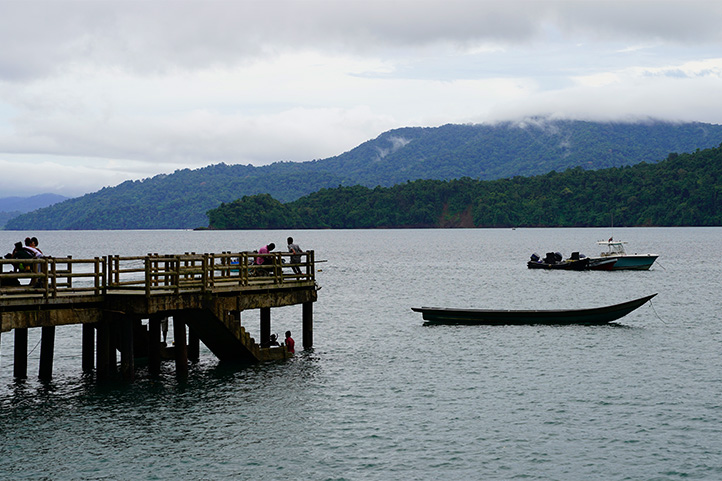
One of the most underrated places in Colombia is certainly the Chocó. This beautiful department is characterized by the fact that it is one of the most biodiverse areas on earth, that it is surrounded by jungle and that it has beautiful beaches and access to the Pacific and Caribbean oceans. The department currently comprises 30 municipalities and borders Panama.
Although the Chocó is one of the areas least visited by foreigners, the situation has changed thanks to some municipalities such as Bahía Solano or Nuquí. Thanks to its beauty and the multitude of activities on offer, the Chocó has become one of the regions of Colombia that will have the greatest impact on ecotourism in the years to come.
Tourist attractions in Chocó
 Bahía Solano
Bahía Solano is undoubtedly a treasure in the Colombian Pacific. It is located in the western part of the Chocó department and is thus surrounded by the north coast of the Colombian Pacific. When visiting the city, be prepared for the fact that it can get quite hot all year round with temperatures above 30 °C. Furthermore, there is regular rainfall and in Bahía Solano it usually rains quite a bit.
This community is characterized by its beautiful beaches with great views, which are also surrounded by jungle. In addition, Bahia Solano is a great place for whale watching and diving.
Things to do and see in Bahia Solano
Whale watching
One of the greatest natural attractions in Bahía Solano is certainly the chance to see humpback whales. Since the community borders the Pacific Ocean, the imposing whales come very close to the beaches from June to November (which we will talk about later).
During this time, an estimated 1,500 to 2,000 humpback whales visit this community to mate and give birth to their calves. There are therefore several whale watching tour providers.
Diving
Bahia Solano is also known as one of the best diving spots in Colombia. You can spot beautiful species of animals such as mojarras, sharks, turtles, and of course the humpback whales that visit this area from June to November.
Bahia Solano has several dive sites with different levels of difficulty and depths from 9 to 42 m. The Playa de Oro Lodge, which is also a hotel and offers dives for certified divers, mini-courses for inexperienced divers, and the necessary equipment.
Another good diving school is Ankla Azul. They offer plans for day and night dives. Requirements are:
- At least 12 years old
- Diving license
- Last dive <1 year ago
Note: If you are interested, I recommend my blog about the best dive sites in Colombia.
Huina Beach
If you arrive by plane in Bahia Solano, the municipal capital Ciudad Mutis is 1.8 miles (3 km) away. From here you can reach most of the municipality’s tourist attractions. The first attraction is the wonderful Playa Huina. Playa de Oro, as this place is also called, is about 20 to 25 minutes by boat from Ciudad Mutis.
Playa de Oro is characterized by its peaceful atmosphere and the combination of jungle and beach, which offers a unique and beautiful view and surroundings. On this beach, you can see different species such as turtles, groupers and of course humpback whales. Playa de Oro is also an interesting place for diving.
In 2004, the National Navy deliberately sank the battleship Sebastián de Belalcázar on this beach, which had been in service for more than 20 years. This was done so that different species such as groupers or snapper could live inside the ship. Today the sunken ship is the most famous dive site in Bahia Solano.
Potes Beach
About 30 minutes from Ciudad Mutis and relatively close to Playa Huina is Playa de Potes, which is characterized by its great beauty and its calm water, in which you can relax and swim.
The Playa de Potes is extensive, its sand is greyish and it is interesting that from there you can see some islets, which are called “Morros Vidales”.
El Almejal Beach
A 30-minute drive (although not all roads are paved) from Ciudad Mutis is the village of El Valle. Here is one of Bahia Solano’s main tourist beaches, El Almejal.
El Almejal beach is almost 1.2 miles (2 km) long and is ideal for walks. You can surf there and it is also ideal for whale watching. A special feature is that the sand on this beach is dark and very soft. There are numerous hotels, hostels, and restaurants in the area.
Nabugá Beach and Waterfall
About 45 minutes by boat from Bahía Solano is Nabugá beach, where you can admire all the beauty of the Chocó forests and visit the incredible Nabugá waterfall.
The Nabugá waterfall is a 36 m high waterfall where you can bathe in the middle of nature. To get there, you have to walk about 15 minutes from the beach.
Jardín Botánico del Pacífico
About 25 minutes by boat from Ciudad Mutis is the village of Mecana, which has a beach, a river, and the very interesting Botanical Garden of the Pacific. It is 170 hectares and offers a variety of activities. The ecological complex has various hiking trails (of medium and advanced difficulty) that allow you to admire different rivers and waterfalls, accompanied by rich flora and fauna.
In the botanical garden, you can not only experience nature but also activities such as the canopy. Local guides can also be hired during the whale season to take a boat trip to see the whales.
There are several huts in the garden where you can spend the night.
Loma de la Virgen
A 30-minute walk from Ciudad Mutis leads to the Loma de la Virgen, a beautiful viewpoint. There you will find a picture dedicated to the Virgin of Carmen and you can enjoy a wonderful view of the community, the jungle, and the sea.
La piscina del amor
About 15 minutes walk from Ciudad Mutis is a beautiful natural pool, also known as the pool of love. It is located next to a small waterfall where you can bathe.
Utría National Natural Park
The Utría National Park covers 54,380 hectares and is located in the municipalities of Bahía Solano, Bojayá, Nuquí and Alto Baudó. This park is popularly known as the “Cradle of the Whales” as the whales come here to give birth to their young. In Utría you can also see other animals such as anteaters, deer, monkeys, and more than 270 species of birds.
There are also several hiking trails and sectors in this park that are ideal for diving. Within the nature complex, there is a restaurant and the Jaibaná visitor center, which can seat up to 31 people.
How to get to the Utria National Natural Park from Bahía Solano
To get to Utría you have to go to the village of El Valle (see above). There is a path from here and the walk takes around 3 hours and 30 minutes.
Alternatively, you can ask locally, various boats go to the park every day.
Playa Blanca
Near the entrance to the Utría National Park is Playa Blanca, which is not very large, but is characterized by its clear sand and its calm atmosphere. Here it is possible to snorkel and dive.
How to get to Bahía Solano
- Direct flight from Medellin
- Flight from Bogota via Quidbo
- Boat from Buenaventura and Nuqui (approx. 18 hours drive)
There is no land connection.
Where to stay in Bahia Solano
Excellent options for a stay in Bahia Solano are:
Posada del Mar Bahía Solano
If you want to get away from the city and relax, Posada del Mar Bahía Solano is a great choice. In this accommodation you will find a swimming pool, hammocks to relax in, the rooms are cozy and have their own bathroom.
Playa de Oro Lodge
CLICK HERE TO GET THE BEST RATES FOR THE PLAYA DE ORO LODGE
One of the best ways to stay in Bahia Solano is at Playa de Oro Lodge. This accommodation not only offers spacious rooms, private bathrooms, and facilities for relaxation, but also the possibility of booking various activities.
Ecolodge El Almejal
CLICK HERE TO GET THE BEST RATES FOR THE ECOLODGE EL ALMEJAL
A great way to connect with nature is the Ecolodge El Almejal, where you can stay in bungalows.
Mapara Crab Lodge
CLICK HERE TO GET THE BEST RATES FOR THE MAPARA CRAB LODGE
This lodge is ideal for relaxing. At the Mapara Crab Lodge, you can stay in huts with cozy rooms and private bathrooms.
What and where to eat in Bahía Solano
Bahai Solano is small and food is available in many places. The local specialty is, of course, seafood.
Nuquí

Nuquí is south of Bahía Solano and is surrounded by rivers. The community is relatively small and has an area of about 370 mi² (956 km²). It is usually hot, the average temperature is 29 °C and, like in Bahía Solano (and in the whole of the Chocó department), it usually rains constantly.
Nuquí is without a doubt one of the greatest natural wonders of Colombia. This beautiful municipality in Chocó is characterized by its incredible beaches that combine the jungle and the sea.
Things to do and see in Nuqui
Whale watching
Like Bahía Solano, Nuquí is one of the few places in Colombia where you can watch the imposing humpback whales from June to November. There are several operators that offer tours.
Surfing
Nuqui is also known as a surfing destination. Even on certain beaches, some people surf very close to the beautiful cetaceans.
Diving
Scuba diving is available at many of the beaches near Nuquí. In the depths of the ocean, one can interact with beautiful animals such as manta rays, tiger sharks, and of course humpback whales. Nuquí has several dive sites, most of them of medium to high difficulty. There are diving schools like Kakiri that offer dives for experienced divers, but also courses and mini-courses for beginners.
The diving depths range from 4.5 to 42 m. Since Nuquí is surrounded by rivers, various sediments flow from the waters into the Pacific Ocean, which means that visibility in the deep sea is not the best.
Playa Guachalito
One of the most paradisiacal and beautiful places near Nuquí is the incredible beach of Guachalito, which can be reached after a 30-minute boat ride.
This beach is characterized by its calm atmosphere, its dark and soft sand and beautiful sunsets. There are several restaurants and hotels in the Guachalito area.
Termales
From Guachalito you can walk to the Corregimiento de Termales in 30 minutes. In this village, there is a natural medicinal bath where you can bathe in thermal water and also have a massage.
Jovi River
The Jovi River is in the village of Jovi, which can be reached in around 45 minutes by boat from the municipal capital of Nuquí. On the Nuquí River, as it is also called, you can take a trip for several hours in a traditional boat of the indigenous communities, the Chingo. On this tour, you get to know the great diversity of flora and fauna.
Cascada La Chontadura
After the tour along the Jovi River, you can take a short walk to the La Chontadura waterfall. It is a small, beautiful, crystal clear waterfall that has a natural pool in which you can also swim.
Playa Olímpica
Just a few minutes from Nuquí is Playa Olímpica, which stretches for 3 miles (5 km). After crossing it, you reach the village of Pangu and the Gulf of Tribugá. This beach is beautiful, you can find a lot of colorful stones in the sand and the sunsets are wonderful.
Morromico
After a walk along the Playa Olímpica, you reach the Gulf of Tribugá, where the beautiful beach of Morromico is located. Well worth a visit for the incredible views, soft sand, and the activities that you can do there. Morromico is home to a large number of birds, making it an interesting place for bird watching. It is also possible to dive on this beach.
Cascada Quebrada de Pedro
The Quebrada de Pedro waterfall is also located in the Gulf of Tribugá. It is a 5-meter high waterfall with a natural pool that is ideal for a relaxing bath.
Parque Nacional Natural Utría
As we mentioned earlier, the Utría National Park shares the area with Bahía Solano and Nuquí.
Playa Blanca
Located near the entrance to Utría National Park, Playa Blanca is a popular destination for travelers visiting both Bahía Solano and Nuquí. This beautiful beach is characterized by its white sand and you can snorkel there.
How to get to Nuquí
- Direct flight from Medellin
- Flight from Bogota via Quidbo
- Boat from Puerto Buenaventura, Valle del Cauca (approx. 18 hours drive)
Where to stay in Nuquí
Some excellent ways to stay overnight in Nuquí are:
El Cantil Ecolodge
CLICK HERE TO GET THE BEST RATES FOR THE EL CANTIL ECOLODGE
The Ecolodge El Cantil is probably the most famous and most comfortable accommodation in the Colombian Pacific. Relaxation is guaranteed.
Pijibá Lodge
CLICK HERE TO GET THE BEST RATES FOR THE PIJIBÁ LODGE
This eco-lodge is ideal for a few days of relaxation. Here you will find 6 accommodations with spacious and comfortable rooms, all of which have their own bathroom.
Cabañas Refugio Salomón
CLICK HERE TO GET THE BEST RATES FOR THE CABAÑAS REFUGIO SALOMÓN
Cabañas Refugio Salomón is located directly on a beautiful beach and is a good choice for a stay in Nuquí.
What can you eat in Nuquí?
As in Bahía Solano, Nuquí has a large number of restaurants that are typical of the Chocóculture. The most common dishes are fish in several variations and seafood.
Capurganá
Another incredible treasure in the Chocó department is the village of Capurganá, which is part of the Acandí municipality. However, this place is not on the Pacific, but on the Atlantic. This heavenly place is known for its beautiful beaches, activities such as diving, and for the border to neighboring Panama, where you can visit the border town of Sapzurro.
Capurganá is a small village and has about 1,500 inhabitants and is 22 meters above sea level. This village is usually quite hot and the average temperature is 25 ° C, but it can also reach 30 ° C.
What to see and do in Capurganá?
Sapzurro and Playa de la Miel
The beautiful Playa de La Miel is located in Sapzurro and is surrounded by a lot of vegetation. The sand is white and the view is incomparable. Here you can dive and see seahorses, manta rays, turtles, and other underwater inhabitants.
You can walk to Sapzurro in around 90 minutes and alternatively, you can take a boat in 20 minutes.
Capurganá Beach
The beautiful beach of Capurganá is only 5 minutes away from the center of Capurganá. Around the heavenly beach, there are several shops selling food and drinks, including the traditional cocktail in a coconut.
Bahía Aguacate
Only 10 minutes by boat from Capurganá is the beautiful bay of Aguacate, which is not characterized by sand, but by grass and huge palm trees. Here you can dive and snorkel. Several corals can be found in its depths.
Playa Soledad
Playa Soledad is one of the most beautiful places in Capurganá and should not be missed when visiting the village. Before reaching the beach, you have to cross a 210 m long bridge, which is surrounded by beautiful mangroves and offers a unique view.
Snorkel and interact with a variety of fish, rays, and turtles on the beach. To get to Playa Soledad, you have two options:
- Walk from Capurganá, about 4 hours
- Boat trip, around 30 minutes
Reserva Natural El Cielo
El Cielo Park can be reached in around 90 minutes on foot. During the tour, you can admire a large amount of fauna and flora, swim in various natural pools, and at the end of the tour enjoy the beautiful El Cielo waterfall.
La Coquerita
Another natural attraction near Capurganá is the famous La Coquerita Beach. This beautiful natural area is about 30 minutes’ walk from the village. In La Coquerita there are two natural freshwater pools right by the sea where you can take a relaxing dip. There is also a bar with hammocks on the beach.
La Piscina de los Dioses
Just minutes from La Coquerita is the famous Pool of the Gods. Plenty of rocks form a circle and a kind of pool.
How to get to Capurganá
- The village of Capurganá has Narciza Navas Airport, so you can arrive by plane from some cities such as Bogotá, Medellín or Quibdó.
- You can also come by boat from Turbo or Necoclí (in Antioquia).
Where to stay in Capurganá
Some excellent accommodation options in Capurganá are:
Cabañas Los Almendros
CLICK HERE TO GET THE BEST RATES FOR THE CABAÑAS LOS ALMENDROS
Cabañas Los Almendros is a great option when staying in Capurganá. The rooms are large and the property has various facilities to relax in, such as a garden and a bar.
Los Robles Capurganá
CLICK HERE TO GET THE BEST RATES FOR THE LOS ROBLES CAPURGANÁ
The great Hotel Los Robles Capurganá welcomes you with spacious and comfortable rooms. The rooms are cozy and have a courtyard with comfortable hammocks.
Tacarcuna Lodge
CLICK HERE TO GET THE BEST RATES FOR THE TACARCUNA LODGE
The property has a bar, swimming pool, hammocks, and other facilities. The rooms are large, surrounded by beautiful gardens, air conditioning, and Wi-Fi.
Tips for visiting Bahía Solano, Nuquí and Capurganá
- In many of the villages and towns mentioned, there are no ATMs, so you should bring enough cash with you.
- The climate is hot and humid. Take suitable clothes and shoes with you, also for tours.
- Take sun protection with you.
- Protect yourself from insect bites.
- Local internet is slow or does not work.
Cultural agenda
Tamborito Festival
This festival in Nuqui is the most representative of the community and usually takes place on January 5th and 6th. This festival honors the tamborito, a traditional dance from the Pacific region. That is why dances and performances take place these days.
Pacific Migration Festival
This festival takes place in Nuquí during the whale season (usually between late August and early September). During these days, children and young people will learn about the importance of the biological diversity of the Pacific and environmental protection. B. in photography.
Bay Festival
In Bahía Solano, it is the main festival of the municipality and usually takes place from August 1st to 7th. During this time, dances, costume and fishing competitions, football tournaments, and a variety of performances are held.
Nightlife in Chocó
Tourism in Chocó is not about partying, but about connecting with nature, visiting the various beaches. You can enjoy a refreshing beer on many of the beaches, but that’s about it.
Chocó Accommodation Guide
The department of Chocó mesmerizes all visitors. From its dreamy beaches to its lush rainforests, it offers options for every type of adventurer. Then match your accommodations with your plans to fully immerse yourself in this natural jewel full of biodiversity and wonder.
Transport in Chocó
There is a wide variety of modes of transport in the larger towns, from taxis to tuk-tuks. However, many routes have to be covered by boat. Walking to the tourist spots is another option, but walks are usually long and exhausting.
Best travel time for Chocó
While the beautiful beaches and landscapes of Nuquí, Bahía Solano, and Capurganá are accessible all year round, the best time to visit these tourist attractions is clearly the whale season, which runs from June to November.
What I like and dislike about Chocó
The Colombian Pacific, though remote, is one of Colombia’s greatest natural spectacles. I am eagerly waiting to be able to visit this region again.
Unfortunately, the security situation outside of the locations described is poor. Therefore, as a traveler, one should not embark on experimental journeys on the two coasts.
Colombia Travel Guides
Here you will find travel guides for the most popular regions in Colombia, which we have put together during our extensive travels around the country.
- Colombia Travel Guide
- Bogota Colombia Travel Guide
- Medellin Colombia Travel Guide
- Cartagena Colombia Travel Guide
- Santa Marta Colombia Travel Guide
- Cali Colombia Travel Guide
- Coffee Triangle Colombia Travel Guide
- Barranquilla Colombia Travel Guide
- La Guajira Colombia Travel Guide
- Tayrona Park Colombia Travel Guide
- Palomino Colombia Travel Guide
- San Andres Island Colombia Travel Guide
- Providencia Island Colombia Travel Guide
- Casanare Llanos Colombia Travel Guide
- Amazonas Colombia Travel Guide
- Chocó Colombia Travel Guide
- Santander Colombia Travel Guide
- Boyaca Colombia Travel Guide
Travel Guides to Colombia’s Small Towns
Here you will find travel guides for less popular destinations in Colombia. Some of these destinations are even real insider tips and not even known to the Colombians as travel destinations.
- Aguachica Colombia Travel Guide
- Arauca Colombia Travel Guide
- Armenia Colombia Travel Guide
- Barrancabermeja Colombia Travel Guide
- Bucaramanga Colombia Travel Guide
- Buenaventura Colombia Travel Guide
- Canyon Chicamocha Colombia Travel Guide
- El Carmen de Bolivar Colombia Travel Guide
- Caucasia Colombia Travel Guide
- Cucuta Colombia Travel Guide
- Florencia Colombia Travel Guide
- Ibagué Colombia Travel Guide
- Inirida Colombia Travel Guide
- Ipiales Colombia Travel Guide
- Magangue Colombia Travel Guide
- Manizales Colombia Travel Guide
- Mitu Colombia Travel Guide
- Mocoa Colombia Travel Guide
- Monteria Colombia Travel Guide
- Neiva Colombia Travel Guide
- Palmira Colombia Travel Guide
- Pasto Colombia Travel Guide
- Pereira Colombia Travel Guide
- Popayan Colombia Travel Guide
- Puerto Asis Colombia Travel Guide
- Puerto Carreno Colombia Travel Guide
- Quibdo Colombia Travel Guide
- Riohacha Colombia Travel Guide
- San José del Guaviare Colombia Travel Guide
- Sincelejo Colombia Travel Guide
- Sogamoso Colombia Travel Guide
- Tulua Colombia Travel Guide
- Tumaco Colombia Travel Guide
- Tunja Colombia Travel Guide
- Turbo Colombia Travel Guide
- Valledupar Colombia Travel Guide
- Villa de Leyva Colombia Travel Guide
- Villavicencio Colombia Travel Guide
- Yopal Colombia Travel Guide
Dear Reader
Liked our content? You are welcome to share it and spread the message that Colombia is one of the most beautiful countries in the world.
