
Updated: · by Frank Spitzer
Caucasia Travel Guide 2026 — Colombiafrank
Start with the Video — Caucasia Travel Overview
Caucasia sits where the Cauca River meets the great Colombian lowlands — Antioquia’s hottest, flattest, most river-defined corner. The COLOMBIAFRANK channel has no dedicated Caucasia video yet; watch the full Caribbean Coast tour to understand the broader cattle-and-gold geography that Caucasia anchors.

I’m Frank, founder of Pelecanus. Caucasia is a working commercial town in the Bajo Cauca — cattle, gold, river commerce. Not a leisure destination on its own; useful as a halfway point on a Medellín–Montería overland trip, or as access to the wider Bajo Cauca subregion.
On this page — jump to a section
- Video Overview
- About Caucasia
- Top Attractions & Things to Do
- Best Day Trips & Bajo Cauca Towns
- Suggested Itinerary — 1 or 2 Days
- Best Tours from Caucasia
- Food Guide
- Events & Festivals
- Best Time to Visit
- Practical Information
- Caucasia or Montería? Quick Comparison
- Likes & Dislikes — Personal Take
- Related Travel Guides
- Frequently Asked Questions
- References & Sources
- About the Author
About Caucasia
Caucasia is the largest town of the Bajo Cauca subregion of Antioquia department1, with about 130,000 inhabitants. Its location on the Cauca River, at the crossroads of routes from Medellín to the Caribbean coast, has made it a regional commercial centre — cattle, gold, agriculture. Tourism is essentially zero; the city’s interest for travellers is purely as a waypoint and as access to the Bajo Cauca wetlands and river towns.
- Department: Antioquia (Bajo Cauca subregion)
- Elevation: 50 m
- Population: ~130,000
- Climate: Tropical savanna, very hot, 28–34 °C year-round
- Airport: Juan H. White (CAQ), 5 km from centre, regional flights
- Best known for: Cauca River, cattle & gold trade, halfway stop Medellín–coast
Top Attractions & Things to Do
Caucasia’s “attractions” are mostly practical urban spaces. Reset expectations: this is a working town, not a sightseeing one.
Cauca River & the Carlos Lleras Bridge
The Cauca runs along the western edge of town and is crossed by the Carlos Lleras Restrepo Bridge — the city’s defining piece of infrastructure. The Cauca here is wide, brown, and slow. Sunset on the bridge is the closest thing Caucasia has to a postcard.
Ciénaga Colombia (Laguna Colombia)
A wetland lake just outside the city, part of the Bajo Cauca floodplain. Birdlife is impressive — herons, kingfishers, jacanas — especially at dawn. Local fishermen run small boats. Best in dry season when the channels are navigable.
Hydrobotanical Garden Jorge Ignacio Hernández Camacho
A small botanical garden focused on Bajo Cauca aquatic ecosystems and native flora. Walking paths, modest but well-kept. Limited hours; check at the alcaldía before going.
Cathedral of the Holy Family & Plaza Principal
The central plaza with the modern Catedral de la Sagrada Familia. The cathedral itself is contemporary rather than historic; the plaza around it is the heart of city life — vendors, street food, weekend music.
Balneario Piedras
A natural swimming spot on a tributary just outside town — popular with locals on weekends. Picnic, cold beer, river dip. Bring repellent.
Best Day Trips & Bajo Cauca Towns
Nechí
One hour east at the confluence of the Cauca and Nechí Rivers. A historic gold-mining town with strong Afrocolombian heritage. The river-port atmosphere is authentic; visit with a local contact for the deepest experience.
El Bagre
Another historic gold town further east. Working dredges still operate on the Nechí River. The cultural mix — Afrocolombian, Indigenous, mestizo — is unique. Travel with a guide.
Zaragoza
One of Colombia’s oldest gold-mining settlements — founded in 1581. A quiet, hot river town with colonial roots and Afrocolombian river culture.
Cáceres & Tarazá
Smaller Bajo Cauca municipalities along the Cauca corridor. Tarazá in particular has been a strategic point on the Antioquia–Coast route. Both are simple working towns; visit only with reliable local guidance.
Suggested Itinerary — 1 or 2 Days
Caucasia is a stopover. One night is plenty unless you’re combining with the Ciénaga Colombia at dawn.
| Day | Morning | Afternoon | Evening |
|---|---|---|---|
| 1 | Arrive (bus or CAQ flight) · plaza walk | Cauca River sunset · bridge photo | Local seafood & sancocho dinner |
| 2 | Ciénaga Colombia at dawn · birdwatching | Hydrobotanical Garden · onward to Montería or Medellín | (Depart) |
| Combined Plan (3 days, Medellín to Coast) | Focus |
|---|---|
| Day 1 | Medellín · drive south via Yarumal · arrive Caucasia evening |
| Day 2 | Ciénaga Colombia at dawn · drive on to Montería |
| Day 3 | Montería + Sinú River · onward to Coveñas or coast |
Best Tours from Caucasia
- Ciénaga Colombia birdwatching boat tour — dawn run with local fisherman-guide.
- Cauca River boat trip — short upstream/downstream loops.
- Gold-mining heritage day trip — to Zaragoza or Nechí with a local cultural guide.
- Bajo Cauca cattle finca visit — working ranches around Caucasia and Cáceres.
- Halfway-stop hospitality — combine with Medellín–Coast overland routing.
Plan Your Caucasia / Bajo Cauca Trip
I’m Frank. Caucasia mostly makes sense as part of a Medellín–Coast overland or a Bajo Cauca cultural-heritage circuit. Let me route it.
Food Guide

Local Dishes
- Sancocho de pescado — Cauca River fish soup (bocachico, bagre).
- Carne asada con plátano — grilled beef with sweet plantain.
- Bandeja de río — local fish platter with coconut rice and patacón.
- Bollos costeños — boiled corn or yuca dough.
- Sopa de mondongo — tripe soup; cattle-country signature.
Street Food
Plaza vendors sell empanadas, fried fish, deditos de queso, and arepa de huevo. Cold lulada and refresco de borojó are common in the heat.
Where to Eat
Mid-range restaurants line Carrera 18 and the area near the cathedral. Almuerzos corrientes run COP 15,000–20,000. Restaurants are functional; the better food is at private fincas (with arrangement).
Events & Festivals

- Festival del Río Cauca (variable) — local river-culture celebration.
- Fiestas Patronales de la Sagrada Familia (December) — patron saint week.
- Cabalgata de Caucasia — annual cattle-country horse parade.
- Festival de la Cumbia y el Bullerengue (in nearby Bajo Cauca towns) — Afrocolombian percussion and dance.
Best Time to Visit
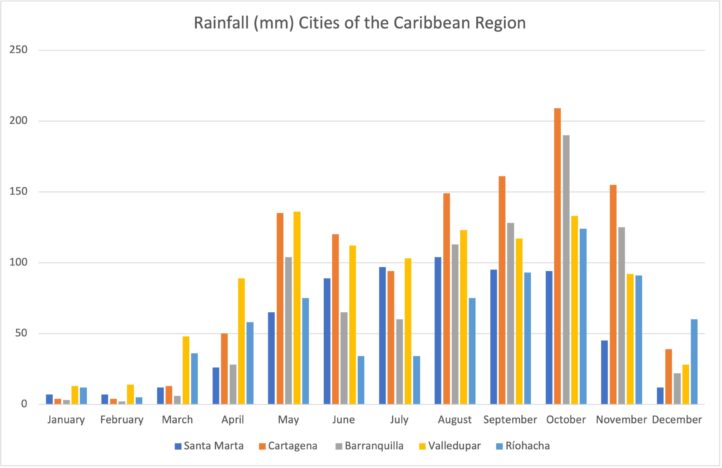
December–March is the practical window — drier, less heavy afternoon rain, the wetlands at a navigable level. Rainy season (April–November) brings heavy storms and the unpaved rural roads turn muddy. The heat is constant year-round; pace day plans around mid-morning and late afternoon.
Practical Information
Arrival at Juan H. White (CAQ)
Caucasia’s small Juan H. White airport (CAQ) sits 5 km from the centre. Regional flights from Medellín (EasyFly, occasional Avianca) operate. Most travellers arrive by road; the airport is sometimes useful for time-tight schedules.
Getting There by Road
- From Medellín: 5.5–6 hours via Yarumal. Frequent buses (Sotracor, Brasilia).
- From Montería: 3 hours west.
- From Cartagena: 8 hours via Sincelejo & Montería.
- From Sincelejo: 5 hours.
Money & SIM cards
ATMs in the centre. Cards work at mid-range hotels and restaurants only. Claro and Movistar 4G work in town; the wetlands are spotty.
Tap Water
Drink bottled.
Where to Stay
| Area | Best for | Notes |
|---|---|---|
| Centre | Plaza access, mototaxi-friendly | Basic mid-range hotels |
| Near Carrera 18 | Restaurants & commerce | Mid-range, functional |
| Near CAQ airport | Pre-flight overnight | Limited options |
Public Transportation
Mototaxis dominate; agree price first. Long-distance buses use a small terminal on the highway. No InDriver or Uber.
Safety & Cultural Tips
Central Caucasia is safe for visitors during the day and around the central plaza in the evening. The Bajo Cauca subregion as a whole has a complex security history — illegal mining, historical conflict, and current dissident activity make rural travel something only to be done with a vetted local guide who knows current conditions. Avoid solo overnight trips to remote Bajo Cauca towns; stick to established routes and operators.
Caucasia or Montería? Quick Comparison
| Factor | Caucasia | Montería |
|---|---|---|
| Department | Antioquia (Bajo Cauca) | Córdoba |
| Elevation | 50 m | 18 m |
| Climate | Hot, very humid | Hot, very humid |
| Vibe | Working commercial town, river crossroads | River city, riverfront park developed |
| Best for | Medellín–coast stopover, Bajo Cauca access | Sinú River, weekend at coast (Coveñas) |
| Food scene | Functional; sancocho de pescado | Mote de queso, river fish, beef |
| Hotels | Basic mid-range | Wider range including El Recreo strip |
| How long | 1 night max | 2–3 days + coast extension |
Montería is the actual destination; Caucasia is the waypoint. If you have only one to spend the night, pick Montería. Read the Montería guide.
Likes & Dislikes — Personal Take
What I like. The Cauca at sunset, with the bridge silhouette and the river working below, is a real Colombia moment that no tourist photo captures. The Bajo Cauca itself is one of the country’s least-marketed cultural complexes — gold-mining river towns, Afrocolombian heritage, raw Antioquia. If you want non-touristed Colombia, this is it.
What I’d skip. Don’t come to Caucasia for leisure — there’s no tourist infrastructure, no atmosphere beyond the practical. The heat is brutal. The Bajo Cauca’s complex security history demands more research and local contacts than most travellers want to invest. Use Caucasia as a waypoint or as a serious cultural-tourism stop, not a casual extension.
Related Colombia Travel Guides
Major Destinations
- Medellín Travel Guide
- Cartagena Travel Guide
- Santa Marta Travel Guide
- Coffee Triangle Travel Guide
- Colombia Travel Guide (Hub)
Off the Beaten Path
- Montería Travel Guide
- Sincelejo Travel Guide
- Magangué Travel Guide
- Turbo Travel Guide
- El Carmen de Bolívar Travel Guide
- Aguachica Travel Guide
Frequently Asked Questions about Caucasia
Is Caucasia worth visiting?
Mostly as a waypoint on a Medellín–Caribbean coast overland or as access to the wider Bajo Cauca cultural-heritage circuit. Alone, it’s a one-night stopover, not a destination.
Is Caucasia safe?
The town centre is safe by Colombian standards during the day. The wider Bajo Cauca subregion has a complex security history — historical conflict, illegal mining — and rural travel should be done only with a vetted local guide. Check current advisories.
How do I get to Caucasia?
By bus from Medellín (5.5–6 hours) or Montería (3 hours). The small Juan H. White (CAQ) airport has limited regional flights from Medellín.
What is the best time to visit Caucasia?
December–March, the dry season — wetland access is best and the heat is marginally more bearable.
What is Caucasia known for?
The Cauca River crossing, cattle and gold trade, the Bajo Cauca commercial centre role, and its function as a halfway point on Medellín–Coast overland routes.
How many days do I need in Caucasia?
One night is enough unless you’re doing a serious Bajo Cauca cultural-heritage trip (which adds 2–3 more days).
Caucasia or Montería?
Montería for actually spending time; Caucasia for the waypoint or for serious Bajo Cauca cultural travel.
Can I visit the gold-mining towns from Caucasia?
Yes — Nechí, El Bagre, and Zaragoza are within day-trip range, but only with a local guide who knows current security conditions.
References & Sources
- Ministerio de Comercio, Industria y Turismo (MinCIT) — Antioquia / Bajo Cauca tourism profile. mincit.gov.co
- ProColombia — Bajo Cauca regional information. procolombia.co
- Centro Nacional de Memoria Histórica — Bajo Cauca recovery profile. centrodememoriahistorica.gov.co
- Wikipedia — Caucasia, Antioquia. en.wikipedia.org/wiki/Caucasia,_Antioquia
- Pelecanus is a registered Colombian tour operator (RNT 51402).
About the Author

Plan Your Colombia Trip with Pelecanus
Pelecanus is Colombia's Swiss-managed tour operator (IAGTO member, RNT 51402, Bogotá since 2017). Continue planning with these hubs:
- Colombia Itinerary Planner — 50+ destinations across all regions
- Colombia Golf Trip Planner — 50+ courses, IAGTO-certified operations
- Colombia Destinations Guide — Cities, climates, signature experiences
Ready to plan? Request a custom proposal or message us on WhatsApp +57 321 214 6210. We respond within 24 hours. (Request a custom proposal)