
Updated on 03/13/2024
Dear reader,
I would also like to recommend our Colombia travel guide, which provides a perfect overview of the tourist attractions in Colombia. Enjoy reading it!
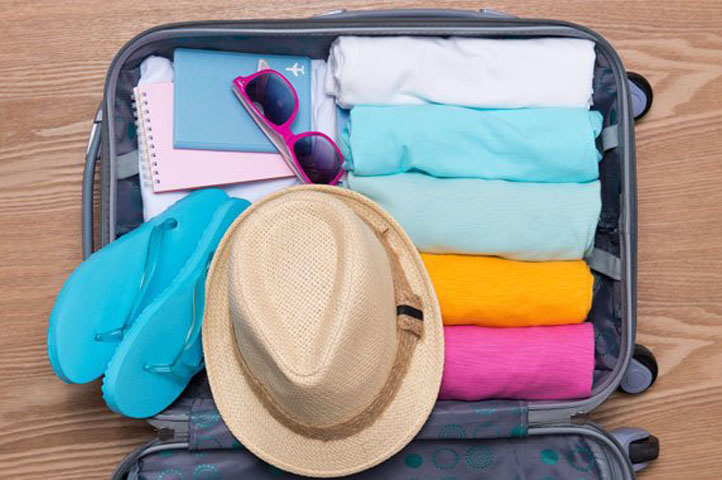
Colombia is one of those paradisiacal travel destinations that has something to see for every type of traveler. It’s full of beaches, jungles, forests, rivers, mountains, and even snow. That’s why we wanted to create this travel guide for you because if you want to visit this beautiful country, you will want to bring the right luggage.
Content
Climate in Colombia
Here are a couple of facts about climate in Colombia. There are no seasons in Colombia. Temperatures are almost constant all year round. The climatic fluctuations occur between summer (dry season) and winter (rainy season). The country lies on the equator and is crossed by the Andes Mountains. Therefore, one can find diverse ecosystems. Colombia has a topographical variety including snow mountains, deserts, sea, jungle, paramo, mangrove, among many other formations and biomes.
You can learn more in-depth about the factors that influence the climate in Colombia and how it is like in all its region on our overview for travelers.
Thermal floors
Thermal floors can be defined as the temperature of a place as a function of its altitude above sea level. This means that when you are in a mountain range more than 3,000 meters above sea level, the climate is cold. However, it is hot 20 meters above sea level.
Colombia has five thermal regions because it is on the equator and receives the sun’s rays vertically.
Warm floor:
Altitude between 0 and 1,000 meters above sea level. The temperatures are between 24 ° and 32 ° degrees Celsius. In Colombia, this area covers 80% of the national territory, divided into the Pacific, Caribbean, Orinoco, and Amazon regions.
Temperate floor:
Altitude between 1,000 and 2,000 meters above sea level. The temperatures are between 18 ° and 24 ° degrees Celsius. This climate covers 10% of the national territory and a clear example of this are the cities of Cali and Medellin.
Cold floor:
Altitude between 2,000 and 3,000 meters above sea level. The temperatures are between 12 ° and 18 ° degrees Celsius. Around 7.9% of the area is in this climate. Examples are the cities of Bogota, Tunja, and Pasto.
Páramo floor:
This ecosystem is only found between 3,000 and 4,000 meters above sea level. The temperatures are between 12 ° and 0 ° degrees Celsius. These areas are almost always in the fog and make up around 2% of the country’s area.
This ecosystem is vital to freshwater production in Colombia, and several Páramo areas in the country are protected by the government.
Glacier floor:
At altitudes of more than 4,000 meters above sea level, temperatures are below 0 ° Celsius. The cold winds and low temperatures make these landscapes unique. In Colombia, the highest peak is at 5,600 meters above sea level. The glaciers only cover 0.1% of the country’s area.
This type of ecosystem is prevalent and vital in the Andean region as most of them are the source of freshwater rivers and are used for human consumption.
Climate in the regions of Colombia
Colombia is a tropical country, but you can find almost all climatic zones spread across the country.
Caribbean region
This region of the country is located in the north of the country and borders Venezuela. The region consists of 8 departments and its climate is classified into dry tropical savannah and semi-arid or arid warm climates.
It is the hottest region in all of Colombia, with temperatures reaching over 30 °C in the dry season, while the area is more prone to hurricanes and tropical storms in the rainy season.
Pacific region
This is located in the western part of the country and borders Ecuador in the south. Its main characteristic is that it is the most biodiverse region in the world and one of the places with the most fauna and flora in Colombia.
The climate of this area is based on the tropical rainforest, i.e. it is a humid tropical climate. It is also the wettest area on our planet. Temperatures range between 24 °C and 28 °C for most of the year.
Andean region
This is located in the heart of Colombia and has various ecosystems such as moors, valleys, and plateaus. The Andean region consists of 17 departments, all of which have a very special climate. The climate is variable as it is cold, warm, and temperate. This variation is due to the location of the mountain ranges, which in turn have different thermal floors.
Amazon region
This region is located in the south of the country and borders Ecuador, Peru, Brazil, and Venezuela and it consists of 6 departments. It is one of the most important regions for the world as it is classified as the planet’s green lung, it is also the largest natural region in Colombia.
The Amazon is a protected nature reserve worldwide and its climate is humid and warm. The temperatures fluctuate between 24 °C and 27 °C. The humidity is always around 85%.
Orinoquia region
This lies in the east of Colombia and borders Venezuela to the east and the eastern Andes mountain range to the west. The region is divided into 4 departments and is characterized by an extensive grass plain throughout its territory.
There is a tropical monsoon and a tropical dry savanna climate. It is one of the hottest areas in the country, reaching over 30 °C in the dry season. The rainy season lasts from March to October and large parts of the area are flooded.
Useful clothes for the beach
The beaches of the Caribbean are very popular with tourists and are particularly crowded during vacation times. The beaches on the Pacific coast, on the other hand, are mostly empty.
- T-shirts / blouses / shirts that fit loosely and are made of soft materials
- Cotton shirts (sleeveless shirts), preferably white
- Pants / skirts or dresses
- Swimsuit / swim shorts
- Sandals / flip-flops
- Comfortable shoes
- Caps / hats
- Sunglasses
- Beach towel
- Comfortable backpack
A selection of Colombian beach destinations:
- Rosario Islands in Cartagena de Indias
- San Andres Island and Providencia
- Nuquí in Chocó
- Tayrona Park near Santa Marta
- Bahía Solano in Chocó
Useful clothes for the desert
- Comfortable shoes
- Light clothes for the day
- Sunglasses
- Sun hat
- Warmer clothes for the night
List of deserts in Colombia:
- La Guajira desert, the northernmost desert on the continent
- Tatacoa Desert in beautiful Neiva, near the village of La Vieja
- Candelaria Desert in Boyacá, in the municipality of Ráquira
- The Nemocón Desert, better known as “Tatacoita”, is located in the municipality of Nemocón
- Zabrinsky desert in the municipality of Mosquera Cundinamarca
Useful clothes for the jungle
- Comfortable shoes
- Rubber boots
- Loose-fitting, long-sleeved clothing
- Sweatshirts and comfortable jeans
- Hat
- Swimsuit
- Socks
- Rain protection or rain poncho
- Sunglasses
For the jungle, we recommend long pants and outerwear. This also protects against mosquito bites and skin contact with plants.
Colombian jungles:
- Amazon rainforest
- Choco rainforest
Useful clothes for the forest
Fun fact: Colombia has more than 59 million hectares of forest.
- Rubber boots
- Comfortable pants and sweatshirt
- Rain protection or rain poncho
- Cap
- Sunglasses
The most beautiful forests in Colombia:
- Los Farallones National Natural Park in the Valle del Cauca
- Otún Quimbaya Fauna and Flora Sanctuary in the Eje Cafetero
- Cañón del Rio Claro Nature Reserve, three hours from Medellín
- Chicaque Park, in the department of Cundinamarca, near Bogota.
Useful clothes for Páramo
The Páramos are ecosystems with a very cold and humid climate. From my experience, wearing rubber boots and a poncho has been a smart choice in my excursions.
- Rubber boots
- Waterproof walking shoes
- Thick socks
- Jeans or a thick sweatshirt to protect you from the cold
- T-shirts
- Waterproof jacket or poncho for the cold
- Cap
- Neck scarf
- Gloves for the cold
- Comfortable backpack for activities, preferably waterproof
Also, wear layers since the sun rays may get strong during the day.
List of the most spectacular paramos in Colombia:
- The Páramo de Sumapaz, the largest in the world, is located south of the city of Bogotá.
- Páramo Chingaza is located between Cundinamarca and Meta, on the eastern Andes mountain range.
- Páramo de Ocetá, located in the municipality of Monguí – Boyacá.
- Páramo de Santurbán, located between the departments of Santander and Norte de Santander.
- Páramo de las Hermosas, located in the central mountain range of the Andes between the departments of Valle del Cauca and Tolima.
Useful glacier clothing
There are currently six glacier areas in Colombia in supervised volcanic zones and some of them can be climbed with the adequate permissions.
- Waterproof trekking shoes or shell shoes
- Warm clothing
- Thermal gloves
- Thermal jacket
- Sweatshirt
- Cap
- Sunglasses
- Thermal socks.
Equipment for climbing a glacier
- Crampons
- Gaiters
- Ice pick
- Rope
- Posts and anchors
List of glaciers in Colombia:
- Sierra Nevada de Santa Marta.
- Sierra Nevada el Cocuy.
- Volcán Nevado del Ruiz.
- Volcán Nevado Santa Isabel.
- Volcán Nevado del Tolima.
- Volcán Nevado del Huila.
Recommendations of items that you shouldn’t leave at home
Dear travelers, here are a few more recommendations:
- Don’t forget your passport
- Take out travel insurance because, as the saying goes, it’s better to be safe than sorry.
- Always take cash with you. There are cities, islands, or regions in Colombia that do not have ATMs.
- Take rechargeable batteries with you. In some places, there is not always electricity.
- Don’t forget your flashlight.
- Protect yourself from insect bites anytime, anywhere.
- Sunscreens are essential.
- Don’t forget the power converter for your devices. The voltage in Colombia is usually 110v.
- Research vaccination requirements in tropical destinations.
We also recommend our article with 99 travel tips for Colombia.
More Colombia Travel Tips
- Colombia Travel Medical Advice & Vaccination Details
- 29 Travel Tips You Need To Know Before Coming To Colombia
- How and Where to Book a Trip? – Travel Agency or Internet?
- Is Colombia Safe To Travel To In 2024?
- 13 Reasons Why You Should Travel To Colombia In 2024
- Colombia Luxury Tours – A Guide to Luxury Travel in Colombia
- Colombia Vacation Guide
- Colombia’s Top 23 Largest and most Important Cities
- 99 Facts & Information About Colombia You Should Know
- Essential Guide to Economical Travel in Colombia – 2024 Edition
- Ideal Length of Stay in Colombia: A Comprehensive Guide
- 23 FUN Facts what COLOMBIA is known for
- What Are Common Mistakes When Planning a Trip to Colombia?
- 19 Must-Buy Travel Souvenirs From Colombia – Cheap & Expensive
- The 8 Most Famous Stereotypes About Colombia: True Or False?
- Useful Things for Your Trip to Colombia
- Travel Insurance in Colombia: Everything You Need to Know Guide
- How to Travel Cheap in Colombia: 15 Proven Tips for Budget Travelers
- Colombia Weather: The Complete Guide for Every Traveler
- Colombia in Numbers: 28 Facts and Statistics about Colombia
- Colombia’s 11 Richest Cities
- The Best Destinations in Colombia: How to Choose Cities to Visit
