
Updated on 04/18/2024
Dear reader,
I would also like to recommend our Colombia travel guide, which provides a perfect overview of the tourist attractions in Colombia. Enjoy reading it!
In Colombia, there’s a liquor for every occasion, from aguardiente to delicate wine. In this blog, you’ll get to know the most popular liquors and cocktails in Colombia.
Most Popular Alcoholic Beverages in Colombia
- Beer
- Aguardiente
- Viche
- Chirrinchi
- Arrechón
- Bolegancho
- Ron Viejo de Caldas
- Whiskey
- Baileys
- Wine
Content
Beer
This fizzy drink remains the most consumed in Colombia. At most gatherings or events, there’s always someone bringing beers, called “polas” in Colombia.
It’s so important that there’s even a saying, “sin pola, no hay fiesta” (without beer, there’s no party). According to the World Health Organization, beer accounts for 71% of alcohol consumption in Colombia, including both domestic and imported beers.
Some popular beers you should try:
- Club Colombia: A lager beer produced by Bavaria company. It’s the most popular premium craft beer in the country.
- Póker: Not only one of the most popular beers in the country but also the most popular industrial lager beer in the Colombian capital, often enjoyed with friends.
- Águila: One of the oldest and most popular beers in Colombia. Its malt is very refreshing and ideal for warm climates, commonly enjoyed on the coast.
- Andina: This beer’s slogan highlights the Colombian Andean landscapes. It’s the most contemporary on this list, an industrial bitter lager that has gained popularity in recent years.
- BBC: A brewery that produces the finest craft beers in the country, including lagers, stouts, and experimental flavors with local ingredients, especially catering to discerning palates.
- Tres Cordilleras: A craft brewery that also produces several “fancy” beers, mainly “Ale” type, representing the elegance of the people in Antioquia. Quite popular in the national artisanal sector.
Aguardiente
If you ever go out partying with Colombian friends, you’ll notice just how skilled they become at chatting up girls every time they take a shot of aguardiente. Even Hitch himself never knew this trick.
Aguardiente is the most popular distilled spirit in Colombia, like vodka for Russians or tequila for Mexicans. It’s truly one of the symbols of Colombian identity.
Some of the most popular ones produced in the country are:
- Aguardiente Antioqueño: The most popular and consumed aguardiente in Colombia, produced in the Antioquia department, with an aniseed and sweet flavor. There are different types, such as tapa roja, tapa azul, and reserva de la montaña, which vary in alcohol content and sugar level.
- Aguardiente Amarillo: Produced in Manizales in the Caldas department and is the pride of Caldenses. Unlike other Colombian aguardientes, this one has 32 degrees of alcohol, 3 degrees more than other Colombian aguardientes.
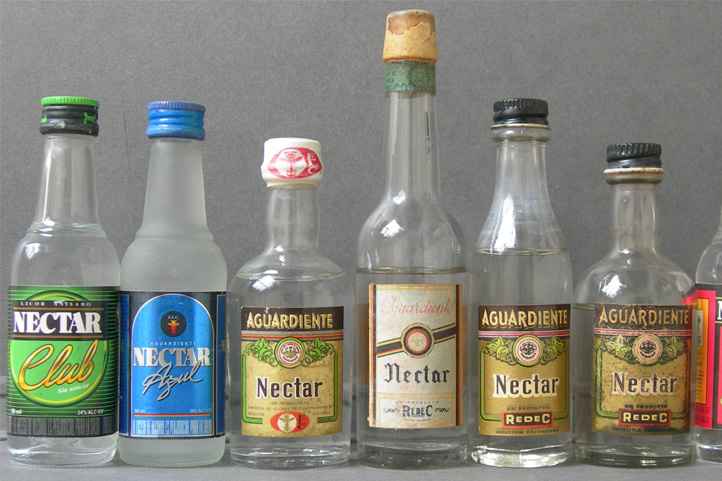
- Aguardiente Néctar: Produced in the Cundinamarca department, it has a very smooth and aromatic flavor. It also has several options such as green, red, and sugar-free.
- Aguardiente Cristal: Produced in the Santander department, it has a slightly more neutral and pure flavor. It is distilled several times to achieve higher quality.
- Aguardiente Blanco del Valle: Manufactured in the Valle del Cauca department, it has a dry and strong flavor. It is one of the oldest in the country and is characterized by its white bottle with a red stripe.
- Llanero Aguardiente: It’s the aguardiente of the eastern plains of Colombia, produced in the Meta and Casanare departments, with a more refreshing flavor than the rest. It is made with organic sugar cane and aged in oak barrels.
- Aguardiente Caucano: It’s the aguardiente produced in the Cauca department, with an intense and aromatic flavor.
- Aguardiente Líder: Originating from the Boyacá region, it is characterized by being a sugar-free aguardiente and is made with 100% pure water, giving it a fairly transparent appearance.
It’s common to see it at all kinds of celebrations throughout the year, from festivals to more informal celebrations and of course weddings too. Additionally, it can be drunk neat or mixed with lemon and salt.
Thanks to its aniseed and herbal flavor, it’s also the favorite local liquor for tourists visiting Colombia. Locals not only use it to break the ice with girls but also with foreign tourists to quickly gain their trust during a party.
Chirrinchi
Chirrinchi is a cane distillate made in La Guajira, mainly by the Wayúu indigenous people on the northern coast of Colombia.
It has a sweet taste and actually has many medicinal properties, from treating headaches to countering snakebites. So, it’s not only used for celebrations and strengthening bonds with loved ones.
Its production is based on cane syrup, which is left to ferment for several days and then distilled in a metal container. It has an alcohol content ranging from 17 to 40 degrees. If you go to the Caribbean coast, locals will eagerly make you try this liquor.
Viche
Viche is a very popular liquor from the Valle del Cauca and Chocó region. It’s a native cane distillate prepared artisanally and is actually used as a base for preparing beverages like arrechón. It has a strong and dry flavor, which can give the sensation of burning the throat.
Depending on who makes it and where, different ingredients like cloves, aromatic spices, borojó, chontaduro, and other local fruits are added to give it different variations. Viche has also become part of the economy and cultural identity. Currently, it’s a symbol of unity and festivity, especially in Cali.
You’ll see it at all celebrations and festivals, as many Vallecaucanas communities sustain themselves by trading this beverage.
Arrechón
Arrechón is an ancestral aphrodisiac drink, sweet and creamy, produced in the Colombian Pacific region in the Valle del Cauca, the most typical one, by the way.
It’s a very important element in Afro-Colombian culture. It’s said to provoke feelings of pleasure and warmth, in other words, increase sexual desire and fertility.
You’ll see it very often, as it’s not only consumed on a daily basis but also at festivals like the Carnival of Blacks and Whites or the Petronio Álvarez Festival, among other very important festivals in the Pacific.
Bolegancho
Bolegancho is surely the most typical liquor from the Santander department and even more so from the city of Ocaña. It’s so popular that there are flavors from passion fruit to blackberry, among other creamy texture flavors like coffee.
It’s characterized by its spicy and sweet flavor, as it’s made from panela (sugarcane juice) and anise, then distilled over a wood fire and bottled.
This beverage is especially consumed during the December holiday season and in some carnivals in the country, but above all, it’s quite common to drink it daily in rural areas of the region.
Ron Viejo de Caldas
Ron Viejo de Caldas is a Colombian rum with over 40 years of history, produced in the Caldas region.
Its production is based on traditional distillation and aging methods, using oak barrels that give it those unique woody characteristics. It is distinguished by its smooth notes of vanilla, caramel, and tropical fruits.
With a 37.5% alcohol content, it’s one of the most popular liquors throughout the country. It’s mostly consumed during the December holidays as Christmas and New Year approach.
It serves as a base for cocktails, such as the Aged Highball, a delightful complex cocktail with a spicy kick and citrusy flavors of the Caribbean.
Rum and Coca-Cola
Rum and Coca-Cola is one of the most popular mixed drinks in the country, especially at social events and celebrations. Even in neighborhood bars, rum and Coca-Cola are commonly mixed. In fact, in Colombia, there are people who won’t drink rum unless it’s mixed with Coca-Cola.
Whiskey
Whiskey has gained popularity in Colombia, becoming an essential part of special celebrations or graduation parties.
Colombia isn’t a major whiskey producer, so there’s a strong preference for international brands like Jack Daniels, Old Parr, Johnnie Walker, and many others.
In case you didn’t know, whiskey doesn’t cause hangovers. That’s precisely one of the reasons why Colombians prefer it over other drinks at a party, especially women.
Like rum, whiskey is often mixed with soda drinks. Although there are Colombian purists who believe whiskey should be consumed neat. Additionally, whiskey is also mixed with Colombian coffee in the cocktail called the coffee old fashioned.
Whiskey is often a common gift for both young and adult birthdays or graduations.
Baileys
The favorite liquor of many discerning palates, especially favored by women, for its creamy texture.
It’s widely used at weddings or birthday parties. For example, to accompany fluffy cakes or pastries on the dessert table. It’s also used to make desserts and coffee drinks like in the famous Colombian coffee chain Juan Valdez.
It’s even common to see men gifting this type of creamy-textured liquor to their partners, especially Baileys.
Its cocktail versatility, sweet, and refined, is what gives this liquor its characteristic.
Wine
Although Colombia isn’t recognized as a major wine region, wine production has experienced growth in recent decades. Nevertheless, wine is quite popular in Colombia.
Some Colombian wines have gained recognition in competitions like Villa de Leyva and Marqués de Leyva.
Like many liquors mentioned earlier, wine is often the centerpiece at family dinners and celebrations such as anniversaries, graduations, birthdays, and family events.
It’s also a common choice for toasting at weddings or on New Year’s Eve. Moreover, since the opening of the D1 supermarket chain in 2009, wine consumption has increased significantly, as it’s quite affordable there.
Local wine cocktails have even been created at events like the Wine and Food Festival or Expovinos.
And if you’d like to know more about cocktails, in Colombia, cocktail culture has grown considerably, with more and more bars and events offering new cocktail proposals. You should know that enjoying cocktails in Colombia is something that many people can’t afford every day, so it’s considered more of a luxury.
What Are the Most Popular Cocktails in Colombia?
In Colombia, you’ll find a wide range of cocktails to satisfy all sorts of tastes and needs. Some of the most popular cocktails include:
- The Colombia: This cocktail represents the colors of the national flag. It’s made with vodka and curaçao, an aphrodisiac fruit, along with orange juice and grenadine. It’s served in a large glass with crushed ice added at the end.
- The Lulada: A typical cocktail from Cali, the salsa capital. It’s made with lulo (a citrus fruit), sugar, ice, and aguardiente or vodka. Served in a glass with ice and garnished with mint leaves.
- The Coco Loco: A typical cocktail from the Colombian Caribbean coast. It’s made with coconut water, white rum, coconut cream, and lemon juice. Garnished with a cherry and a lemon slice.
- The Sabajón: The Colombian version of Italian zabaglione. It’s made with egg yolk, sugar, aguardiente, wine, sugar cane, anise, and there are variations with local ingredients like feijoa (a local fruit) and coffee. Typical of the Cundiboyacense highlands.
- The Canelazo: A hot beverage prepared with aguardiente, water, panela (unrefined cane sugar), cinnamon, and sugar. It’s a hot cocktail, very popular during the December festivities.
- The Aguardiente Sour: A very popular cocktail with citrus and anise flavors, quite refreshing and popular as it’s found in most bar and cocktail menus across the country.
More about Culture and Events in Colombia
- Colombia’s 45 Best & Biggest Festivals in Detail
- How Many Languages are Spoken in Colombia? A Comprehensive Language Guide
- Complete Colombian Slang Guide: Essential Words for Your Trip to Colombia
- The 7 Most Terrifying Legends of Colombia
More about Colombian food
- 31 Colombian Dishes and Food From All Regions You Should Try
- Colombia’s Most Popular Street Foods
- Discover 36 Traditional Breakfasts of Colombia
- 22 Colombian Fruits and Their Culinary Applications in Local Cuisine
- 16 Traditional Colombian Soups You Must Try
- The 30 Best Desserts in Colombia by Region
- Colombian Chicha’s Hidden Cultural History and Meaning
- Colombian Drinks: 16 Refreshing and Delicious Beverages to Try
- 7 Traditional Colombian Cheeses to Try: A Complete Guide
- Colombia’s Crave-Worthy Snacks: 35 Bites You Can’t Miss
- The 16 Most Popular Liquors and Cocktails in Colombia
- Where to Find Vegetarian and Vegan Food in the Major Cities of Colombia
